Almost everyone starts in the same place. You bought a camera, it came with an 18-55mm lens in the box, and for the first few months that lens was fine. Then you tried to shoot a birthday party indoors, or a portrait with a blurred background, or anything after 6pm, and the results were disappointing in a way you could not quite explain.
That is the moment people start searching for the Sigma 18-50mm vs kit lens comparison. So let us settle it properly, with the honest answer rather than the enthusiast answer.
What you actually own right now
Your kit lens is almost certainly one of these:
- Sony E 18-55mm F3.5-5.6 OSS
- Sony E PZ 16-50mm F3.5-5.6 OSS
- Fujifilm XC 15-45mm F3.5-5.6 OIS
- Canon RF-S 18-45mm F4.5-6.3 IS STM
They share one defining characteristic: a variable maximum aperture. At 18mm you get f/3.5. Zoom to 50mm and you are at f/5.6 whether you like it or not. That is not a defect. It is how the lens was designed to be cheap and small.
The consequence is that your lens gets darker the more you zoom in, exactly when you are most likely to be shooting a portrait or a distant subject in poor light.
What the Sigma 18-50mm F2.8 does differently
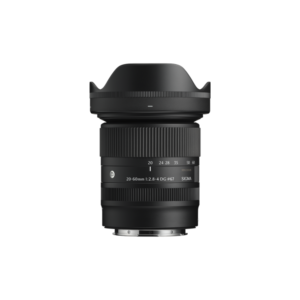
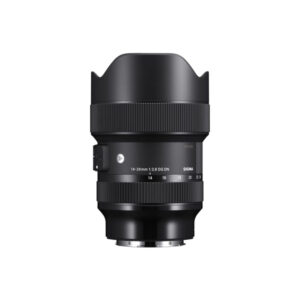
The Sigma 18-50mm F2.8 DC DN Contemporary holds f/2.8 across the entire zoom range. At 18mm it is f/2.8. At 50mm it is still f/2.8.
Against a kit lens at 50mm, that is a two-stop difference. Two stops is not a marginal improvement. Two stops means:
- Four times more light hitting your sensor
- ISO 1600 instead of ISO 6400 in the same room
- 1/125s instead of 1/30s, so your subject stops blurring when they move
- Meaningfully shallower depth of field, so backgrounds actually separate
If you take nothing else from this article, take that. The entire case for this lens is those two stops.
Size and weight: the surprise
You would expect a constant f/2.8 zoom to be a monster. Traditional f/2.8 standard zooms weigh well over 600g and cost more than the camera body.
The Sigma 18-50mm weighs around 290g and is about 74mm long. That is roughly the size of the kit lens it replaces, and it is smaller than most 50mm f/1.4 primes.
Sigma pulled this off by designing it exclusively for APS-C mirrorless and refusing to cover a full-frame image circle. It is a specialist lens, and the specialisation bought back all the size a fast aperture usually costs.
For anyone shooting on a Sony a6400 or a6700, this matters enormously. The whole point of that body is that it disappears into a bag. A lens that undoes that is a lens you leave at home.
Image quality, honestly compared
Sharpness
Kit lenses are not soft. This is the myth that needs killing. A modern 18-55mm shot at f/8 in good light produces a sharp, perfectly publishable image. If you print your holiday photos at A4, you will not see a difference.
The Sigma is sharper, but where it wins is wide open. A kit lens at its maximum aperture is at its worst. The Sigma at f/2.8 is already close to its best. So the real comparison is not “sharp versus soft”, it is “sharp when you need to shoot wide open versus soft when you need to shoot wide open”.
Corners
Kit lenses fall apart in the corners, particularly at the wide end. The Sigma holds up considerably better. This matters for landscape and architecture, and matters not at all for portraits.
Contrast and colour
The Sigma renders with noticeably more contrast straight out of camera. Kit lens files often look slightly flat and need a curve pulled in editing. Not a dealbreaker, but if you deliver JPEGs, you will notice.
Bokeh
This is the one people care about most and the one where the gap is widest.
At 50mm f/5.6 on APS-C, your background is soft-ish. It is a blur suggestion. At 50mm f/2.8, the background genuinely dissolves. Combined with the Sigma’s rounded aperture blades, out-of-focus highlights render as clean circles rather than the polygonal shapes a kit lens produces.
If “I want that blurry background look” is why you are reading this article, this is your answer.
Close focus: the underrated feature
The Sigma 18-50mm focuses down to 12.1cm at the wide end. That is close enough to fill the frame with a coffee cup, a plate of food, or a piece of jewellery.
This turns a standard zoom into a semi-macro lens. For anyone shooting food, product photos for a small online business, or detail shots for content, it removes an entire lens purchase from your future. Kit lenses cannot get anywhere near this.
Where the kit lens actually wins
Being fair costs nothing, and there are three real advantages:
1. Image stabilisation. Most kit lenses have OSS or OIS. The Sigma has none. If your body has in-body stabilisation (a6600, a6700, ZV-E1), this is irrelevant. If you are on an a6000, a6100 or a6400, you lose stabilisation entirely.
This matters most for video. Handheld video with the Sigma on an unstabilised body needs a gimbal or a very steady hand. For stills, the extra two stops of aperture mostly compensate, because you can use a faster shutter speed.
2. Reach. 55mm versus 50mm sounds trivial, and it is. But if you have a 16-50mm, you gain 2mm at the wide end with the Sigma, and 16mm to 18mm is a real difference for tight interiors and vlogging.
3. It is already paid for. The Sigma costs money you could put toward a body upgrade, a flash, or a prime lens.
The comparison at a glance
| Kit lens (18-55mm) | Sigma 18-50mm F2.8 | |
| Max aperture | f/3.5-5.6 variable | f/2.8 constant |
| Light at 50mm | f/5.6 | f/2.8 (4x more) |
| Weight | ~200g | ~290g |
| Stabilisation | Yes | No |
| Min focus | ~25cm | 12.1cm |
| Wide-open sharpness | Weak | Strong |
| Background blur | Limited | Genuine |
| Build | Plastic mount on some | Metal mount, dust/splash resistant at mount |
So who should upgrade?
Buy it if you shoot:
Indoors, at all. Restaurants, homes, offices, events, anywhere without a window doing the work. This is the single strongest case.
Portraits. The 50mm end at f/2.8 gives you a 75mm-equivalent portrait lens with real subject separation.
Events or weddings on APS-C. Two stops is the difference between usable and unusable at a reception.
Products or food for a business. The close-focus plus the aperture handles almost everything a small online seller needs.
Travel, where weight matters. One lens covering wide to short telephoto at f/2.8 in under 300g is genuinely hard to beat.
Don’t buy it if:
You mostly shoot outdoors in daylight. At f/8 in sunshine, your kit lens is fine. Spend the money on a tripod or a trip.
You shoot handheld video on an unstabilised body. The lack of OSS will hurt more than the aperture helps.
You want maximum blur above all else. A 56mm f/1.4 prime will destroy this lens for bokeh. It just cannot zoom.
You need reach. If your frustration is that subjects are too far away, you need a telephoto, not a faster standard zoom.
The real alternative: a prime instead
Worth saying out loud. Instead of this lens, you could buy a Sigma 30mm F1.4 DC DN or 56mm F1.4 DC DN for less money and get an even faster aperture.
The trade is convenience. A prime forces you to walk, and there are situations where you cannot. The 18-50mm is the lens you leave on the camera. A prime is the lens you mount when you know what you are shooting.
Most people who own both use the 18-50mm about 70% of the time. That number is the argument.
Buying notes for Bangladesh
The Sigma 18-50mm F2.8 DC DN Contemporary comes in Sony E, Fujifilm X, L-mount and Canon RF-S. Confirm your mount before ordering. The optical formula is identical across mounts.
Buy through an authorised channel so you have local warranty coverage. This lens uses a stepping motor for autofocus, and while it is reliable, a lens without warranty support is a lens you are gambling on.
Prices in Bangladesh move with duty and exchange rates, so check current pricing with your dealer rather than relying on figures from an older article.
Store it in a dry cabinet. Dhaka humidity does not care how good your glass is.
Frequently asked questions
Yes, if you shoot indoors, shoot portraits, or want real background blur. The constant f/2.8 gives you two extra stops at the long end, which changes what you can shoot rather than just improving what you already shoot. If you shoot outdoors in daylight, the upgrade is much harder to justify.
No. If your camera body has IBIS, this does not matter for stills or video. On an unstabilised body such as the a6400, you lose stabilisation, which mainly affects handheld video.
The image quality and aperture are excellent for video. The lack of stabilisation and some focus breathing are the limitations. On an IBIS body or a gimbal, it is a strong video lens.
It will mount on Sony full-frame bodies but will force a crop, giving you roughly 26 megapixels on an a7 IV. It is designed for APS-C and should be bought as an APS-C lens.
The 30mm is faster and cheaper but does not zoom. If you want one lens on the camera at all times, take the 18-50mm. If you shoot deliberately and want maximum blur, take the 30mm.
The verdict
The kit lens is not bad. It is limited, and the limits show up exactly when photography gets interesting: indoors, in the evening, and when you want your subject to stand out from the background.
The Sigma 18-50mm F2.8 removes those limits for roughly the size and weight you already carry. For most APS-C shooters, it is the single most useful upgrade available, and it is the one people say they should have bought sooner.