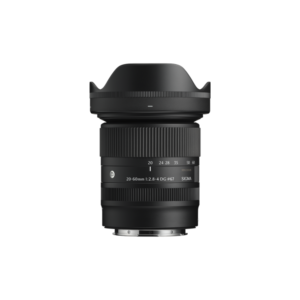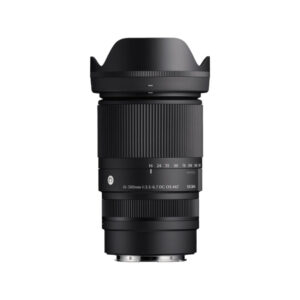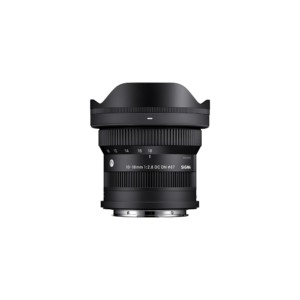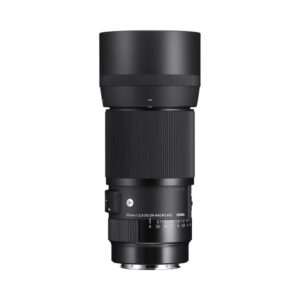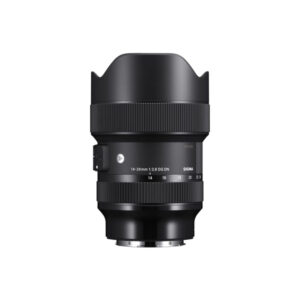
It is one of the oldest debates in photography and videography: prime lens or zoom lens? Walk into any camera store — or browse the extensive inventory at Hope Enterprises Bangladesh, the country’s authorized SIGMA distributor — and the question will inevitably come up. The shelves hold extraordinary examples of both: razor-sharp SIGMA Art primes that render the world with painterly precision, and optically exceptional SIGMA zoom lenses that offer creative freedom across a range of focal lengths with a single twist of the barrel.
The honest answer is that neither type is universally superior. The best SIGMA lens for you depends entirely on how you shoot, what you photograph, how you work, and what creative outcomes you are chasing. This comprehensive guide will walk you through every dimension of the prime versus zoom lens debate, using SIGMA’s remarkable lineup as our reference point, so you can make a confident, informed buying decision.
Whether you are a portrait photographer building your first serious kit, a street shooter looking for a versatile travel companion, a videographer assembling a cinematic lens set, or a professional looking to expand into new genres — understanding the genuine differences between prime and zoom lenses will sharpen every decision you make from this point forward.
Understanding the Fundamental Difference: Prime vs Zoom
Before comparing the merits of specific SIGMA lenses, it is important to establish what we actually mean by prime and zoom lenses, because the distinction is more nuanced than many photographers realise.
What Is a Prime Lens?
A prime lens — also called a fixed focal length lens — has a single, unchangeable field of view determined by its focal length. A 50mm prime always shows you the world at 50mm. To change your composition, you move your feet rather than your fingers. SIGMA’s Art series prime lenses — from the ultra-wide 14mm f/1.8 to the telephoto 135mm f/1.8 — are celebrated examples of this category.
The defining characteristic of prime lenses is optical simplicity. With fewer glass elements required to cover a single focal length versus an entire zoom range, lens designers can prioritise maximum sharpness, minimal aberration, and wider maximum apertures. This is why prime lenses consistently achieve wider maximum apertures — f/1.4, f/1.2, or even f/0.95 — that zoom lenses simply cannot match at comparable cost.
What Is a Zoom Lens?
A zoom lens covers a range of focal lengths within a single optic. Rotating the zoom ring physically changes the focal length, giving photographers and videographers immediate access to wide, standard, and telephoto perspectives without changing lenses. SIGMA’s zoom lineup includes legends like the 18-35mm f/1.8 Art — itself considered by many to be the world’s best APS-C zoom — and the full-frame 24-70mm f/2.8 DG DN Art.
Modern SIGMA zoom lenses have closed the optical quality gap with primes significantly. Advanced glass formulations, including SIGMA’s proprietary FLD (F Low Dispersion) and SLD (Special Low Dispersion) elements, allow contemporary zoom designs to achieve resolution, contrast, and colour rendering that would have been impossible even a decade ago.
The Case for SIGMA Prime Lenses
Prime lenses have been the tool of choice for portrait photographers, street photographers, documentary filmmakers, and fine art image-makers for generations. Here is why SIGMA’s Art prime lineup continues to earn its reputation:
1. Superior Maximum Aperture
The most immediately compelling advantage of a prime lens is the availability of very wide maximum apertures. SIGMA’s Art series primes are available at f/1.4 across focal lengths from 20mm to 135mm — and the exceptional 50mm f/1.2 DG DN Art pushes even further into light-gathering territory.
A wider maximum aperture delivers three critical benefits for photographers and video creators: dramatically improved performance in low-light environments without resorting to high ISO values; shallower depth of field for the subject-isolating background blur that defines professional portraiture; and faster shutter speeds that freeze motion in challenging lighting conditions.
For photographers working indoors — at events, weddings, in studios with minimal lighting, or on location in dimly lit environments — the difference between f/1.4 and f/2.8 represents two full stops of light. That is the difference between a clean ISO 800 image and a noisy ISO 3200 image. It is not trivial.
2. Optical Excellence — Peak Resolution and Rendering
SIGMA Art primes are routinely measured among the sharpest lenses in their respective focal length categories — frequently outperforming lenses costing two to three times as much from competing manufacturers. The optical formula of a prime lens has one singular objective: to render a single focal length as perfectly as physics allows. The result is extraordinary centre and edge sharpness, exceptional microcontrast, and a rendering character that gives images a distinctive, premium visual quality.
Photographers who print large, crop aggressively, or require pixel-level accuracy for commercial or scientific work will notice the optical advantage of a prime lens most acutely. The SIGMA 85mm f/1.4 DG DN Art, for example, produces portrait images with a three-dimensional quality and a background rendering so smooth it looks almost painted — characteristics that define the look of high-end fashion and advertising photography.
3. Compact Size and Weight Advantages
Because prime lenses do not need to accommodate zoom mechanisms — additional glass elements, moving internal groups, and associated mechanical infrastructure — they can be designed more compactly and lightly than equivalent-quality zoom lenses. SIGMA’s Contemporary series primes, in particular, deliver impressive optical quality in genuinely pocketable form factors that make them ideal travel companions for street and documentary photographers who need to move quickly and discreetly.
4. The Creative Discipline of a Fixed Focal Length
This benefit is harder to quantify but widely acknowledged among experienced photographers: working with a prime lens builds compositional discipline. When you cannot zoom, you must engage more actively with your subject — moving closer, stepping back, seeking different angles. Many photographers report that their work becomes more intentional, more considered, and ultimately more distinctive when they commit to a single focal length for extended periods. Some of photography’s greatest bodies of work — street, documentary, reportage — have been produced almost exclusively with prime lenses.
The Case for SIGMA Zoom Lenses
The narrative that zoom lenses are optical compromises designed for convenience at the cost of quality is outdated — and SIGMA has done more than almost any other manufacturer to retire it permanently. Here is why SIGMA zoom lenses deserve serious consideration:
1. Versatility That Transforms Your Shooting Experience
A single high-quality zoom lens can replace three, four, or even five prime lenses in your bag. The SIGMA 24-70mm f/2.8 DG DN Art covers the wide-angle perspective most appropriate for environmental portraits and group shots, the flattering 50mm standard view beloved by documentary photographers, and pushes toward 70mm — a useful short telephoto for tighter portraits and detail work. For a photographer working an entire wedding day, a corporate event, or a travel assignment, this kind of range within a single optic is transformative for workflow efficiency.
Zoom lenses also enable compositional precision that is genuinely difficult to achieve with primes alone. When you are photographing a performer on a stage, a wild animal in its habitat, or an architectural detail across a busy street, the ability to fine-tune your framing without physically repositioning can mean the difference between capturing the decisive moment and missing it entirely.
2. Modern Optical Quality That Rivals Primes
SIGMA’s 24-70mm f/2.8 DG DN Art and 18-35mm f/1.8 DC HSM Art are not conventional zoom lenses — they represent the absolute pinnacle of what zoom lens engineering can achieve. Resolution tests consistently show these lenses matching or approaching the performance of many prime lenses, particularly at the apertures where both categories overlap (f/2.8 and smaller).
The 18-35mm f/1.8 Art is particularly remarkable — a zoom lens that maintains f/1.8 across its entire range, a feat previously considered impossible at a commercially viable price point. This single lens made headlines when it launched and remains one of the most influential lens designs of the past decade.
3. Reduced Lens Changes — A Practical Production Advantage
Every time you change lenses in the field, you introduce risk: dust on the sensor, missed moments while swapping glass, potential damage in adverse weather. For event photographers, photojournalists, and videographers working in demanding environments, minimising lens changes is not just a convenience — it is a professional necessity. A well-chosen SIGMA zoom lens that covers your most-used focal range keeps you shooting rather than switching.
4. Cost Efficiency for Covering Multiple Focal Lengths
While individual SIGMA zoom lenses represent a significant investment, they often represent better value than purchasing equivalent prime lenses to cover the same range. The SIGMA 24-70mm f/2.8 DG DN Art costs considerably less than buying the SIGMA 24mm, 35mm, 50mm, and 70mm Art primes separately — even though the individual primes would each deliver marginally superior optical performance at their specific focal length.
Head-to-Head Comparison: SIGMA Prime vs Zoom
| Feature | SIGMA Prime Lenses | SIGMA Zoom Lenses |
| Maximum Aperture | f/1.2 – f/1.4 available | Typically f/1.8 – f/2.8 |
| Low-Light Performance | Excellent — industry-leading | Very Good (at f/2.8) |
| Optical Sharpness | Peak performance per focal length | Near-prime quality in best models |
| Bokeh / Background Blur | Exceptional at wide apertures | Good — less pronounced |
| Versatility | Limited to one focal length | Covers a complete focal range |
| Size & Weight | Generally lighter and compact | Larger due to zoom mechanism |
| Workflow Speed | Requires lens changes | One lens for many situations |
| Creative Discipline | Encourages deliberate composition | Easy compositional flexibility |
| Price (per focal length) | Higher per lens | Better value across a range |
| Best For | Portraits, low-light, fine art | Events, travel, journalism, video |
The Best of Both Worlds: SIGMA’s Hybrid Strategy
One of the most interesting developments in SIGMA’s lens design philosophy over the past several years has been their deliberate strategy of closing the gap between prime and zoom performance. The 18-35mm f/1.8 Art is the most famous example — a zoom lens with a prime-like constant maximum aperture of f/1.8. It challenges the fundamental premise that you must choose between aperture width and focal length flexibility.
SIGMA has continued this philosophy in their DN mirrorless lens lineup. The 28-45mm f/1.8 DG DN Art — designed specifically for full-frame mirrorless systems — extends this concept to the standard zoom range most photographers reach for most frequently. With f/1.8 available across the entire 28-45mm range, photographers gain meaningful low-light performance alongside genuine compositional flexibility.
This approach represents SIGMA’s broader mission: not to force photographers into false compromises, but to engineer solutions that deliver what photographers actually want — wide apertures and zoom flexibility, combined in a single thoughtfully designed lens.
Which SIGMA Lens Should You Actually Buy?
After understanding the theoretical differences, most photographers want a clear, practical answer. Here is our guidance based on shooting style and use case:
Choose a SIGMA Prime Lens if…: you primarily photograph portraits, headshots, or boudoir work where background rendering and depth of field control are paramount; you frequently shoot in available light at social events, concerts, or indoor environments without flash; you are a street or documentary photographer who values compactness and the creative discipline of a single field of view; or you are a filmmaker who needs the widest possible aperture for achieving cinematic depth of field on a mirrorless camera body.
Recommended SIGMA Primes: SIGMA 85mm f/1.4 DG DN Art (portraiture), SIGMA 35mm f/1.4 DG DN Art (street/documentary), SIGMA 50mm f/1.2 DG DN Art (low-light excellence), SIGMA 14mm f/1.8 DG HSM Art (landscape/astrophotography).
Choose a SIGMA Zoom Lens if…: you work events, weddings, or commercial shoots where shooting speed and versatility outweigh marginal optical differences; you travel extensively and want to minimise bag weight and the risk of dust contamination from frequent lens changes; you are building a video kit where covering multiple focal lengths efficiently matters more than absolute maximum aperture; or you are a beginner looking for a high-quality all-purpose lens that will serve you well across many different photographic situations.
Recommended SIGMA Zooms: SIGMA 24-70mm f/2.8 DG DN Art (professional all-rounder), SIGMA 18-35mm f/1.8 DC HSM Art (APS-C run-and-gun), SIGMA 100-400mm f/5-6.3 DG DN OS Contemporary (wildlife/sports), SIGMA 28-45mm f/1.8 DG DN Art (the hybrid prime-zoom standard).
Consider Both if…: you are at an intermediate-to-advanced level with a growing kit — a professional 24-70mm zoom as your everyday workhorse combined with one or two Art primes in your most-used focal lengths gives you flexibility for spontaneous shooting and optical excellence when the shot demands it. This dual strategy is what most professional photographers actually employ in practice.
Get Expert Advice at Hope Enterprises Bangladesh
Choosing between prime and zoom lenses is a decision worth making carefully — and it is one our team at Hope Enterprises Bangladesh helps customers navigate every day. As Bangladesh’s authorized SIGMA distributor, we stock the complete SIGMA Art, Contemporary, Sports, and Cine lens ranges, giving you the rare opportunity to compare prime and zoom options side by side with hands-on handling before you commit.
Our consultants are working photographers and videographers. When you ask us whether you should invest in the SIGMA 50mm f/1.4 DG DN Art or the SIGMA 24-70mm f/2.8 DG DN Art, we will give you an honest answer based on your actual shooting requirements — not a sales pitch.
- Full SIGMA Art, Contemporary, Sports, and Cine lens inventory in Bangladesh
- Hands-on demonstration units available for serious buyers
- Official SIGMA warranty coverage and authorized local service support
- Expert consultation in both English and Bengali for photography and video applications
- Corporate procurement services for studios, production companies, and media organizations
- Competitive and transparent SIGMA lens pricing in Bangladesh
Whether you are just beginning your photographic journey or expanding a professional lens kit that already spans multiple systems, Hope Enterprises Bangladesh is your trusted partner for SIGMA optics in the region.
Visit us at hopeenterprises.com.bd to explore the full SIGMA lens range available in Bangladesh, or contact our sales team for a personalised consultation tailored to your photography or video production needs.
Final Verdict: Prime or Zoom — The Answer Is in Your Workflow
The prime versus zoom debate does not have a universal winner — and anyone who tells you otherwise is oversimplifying a genuinely nuanced decision. What is clear is that SIGMA has elevated both categories to extraordinary heights, blurring the lines that once separated them and giving photographers and filmmakers remarkable options at every price point and specialisation.
Prime lenses reward patience, deliberate composition, and a commitment to optical excellence at a specific field of view. They shine in low light, produce the most compelling background separation, and have a rendering character that many photographers find distinctly inspiring. SIGMA’s Art prime series represents perhaps the greatest achievement in affordable prime lens design in photographic history.
Zoom lenses reward versatility, efficiency, and the kind of rapid creative adaptation that real-world shooting demands. In the hands of a skilled photographer, a great zoom lens like the SIGMA 24-70mm f/2.8 DG DN Art or the groundbreaking 18-35mm f/1.8 Art produces images that are indistinguishable from prime-quality work — and they do so without the workflow friction of constant lens changes.
The wisest investment strategy is usually a staged one: start with a high-quality zoom that covers your most essential range, then add primes selectively as your creative vision and professional specialisation become clearer. Hope Enterprises Bangladesh can help you build that kit intelligently — one exceptional SIGMA lens at a time.