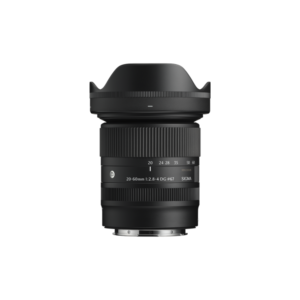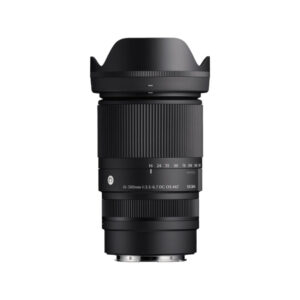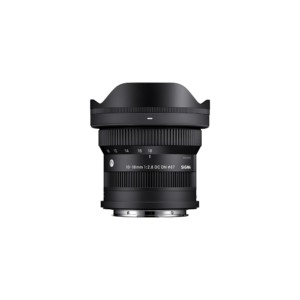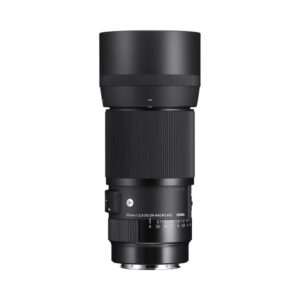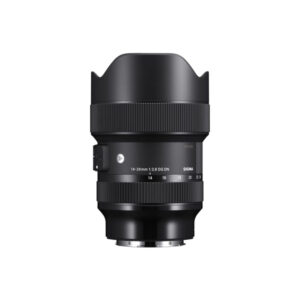
A Sigma lens is a serious purchase. Spend that kind of money and you expect a genuine product, a working warranty, and support if something goes wrong. Unfortunately, the camera market in Bangladesh — like everywhere — has its share of grey-market imports, mismatched warranties, and the occasional counterfeit box. Knowing how to tell a genuine Sigma lens from a questionable one protects both your money and your gear.
This guide explains what “grey market” really means, how to check that a Sigma lens is authentic, and how warranty works in Bangladesh. As the authorised Sigma distributor in the country, Hope Enterprises deals with these questions every day, and the checklist below is the same one we’d walk any careful buyer through.
First, what “fake” actually means
When people say “fake lens,” they usually mean one of three different things, and it’s worth separating them:
- Grey-market (parallel import) lenses. These are genuine Sigma lenses, but imported through unofficial channels and not intended for sale in Bangladesh. The glass is real; the problem is that the international warranty often isn’t honoured locally, and you have no authorised service backup here.
- Counterfeit or tampered units. Rarer, but they exist — repackaged, refurbished, or damaged lenses sold as new, or accessories and boxes made to look like Sigma’s. These are the ones that genuinely cheat you.
- Mount or version mismatches. Not fake at all, but the wrong lens — a Sony E-mount lens sold to a Canon shooter, or an older discontinued version passed off as the latest. Honest mistakes and dishonest sellers both cause this.
Most buyer regret in Bangladesh comes from category one and category three, not outright counterfeits. The good news is that all three are avoidable with a little care.
Why grey-market lenses are a risk
A grey-market Sigma lens can look identical to the official one and even perform identically on day one. The risk shows up later:
- No valid local warranty. If the autofocus motor fails or the aperture sticks, an unofficial import may not be covered by the authorised distributor in Bangladesh, leaving you to pay for repairs yourself.
- No local service support. Sigma lenses occasionally need firmware updates or calibration. Authorised channels handle that; grey-market sellers usually can’t.
- Uncertain history. You don’t always know whether an unofficial unit is brand-new, a return, or a display piece.
- No recourse. If the lens is faulty out of the box, an informal seller may simply stop responding.
The savings on a grey-market lens are often small, and they disappear the moment you need a repair. For a product you’ll use for years, the official route is almost always the better value.
How to check a Sigma lens is genuine
Here’s the practical checklist. Run through it before you pay.
1. Check the serial number
Every genuine Sigma lens has a unique serial number, printed on the lens barrel and printed again on the box. They must match. A mismatch, a missing number, or a sticker that looks reprinted is a red flag. Authorised sellers can also verify a serial number against distributor records.
2. Inspect the box, seals and printing
Genuine Sigma packaging is clean and precise: sharp printing, correct logos, no spelling errors, and a factory seal that hasn’t been tampered with. Blurry text, off-colour logos, a resealed box, or a box that feels flimsy all warrant caution. Compare against images of official packaging if you’re unsure.
3. Confirm the papers and warranty card
A genuine lens ships with the correct documentation — user guide and warranty card — appropriate to the region of sale. For a lens meant for Bangladesh, the warranty should be registrable with the authorised distributor. If the paperwork is missing, or the warranty card points to a different country’s service centre, you’re likely looking at a grey-market unit.
4. Look at build and markings
Sigma’s build quality is consistent: smooth focus and zoom rings, precise “Made in Japan” or equivalent markings, a clean mount with gold-coloured contacts, and no rattling internals. Rough edges, loose rings, or crooked labelling don’t belong on a genuine Art or Contemporary lens.
5. Verify the exact model and mount
Read the full model designation on the barrel — for example, Sigma 18-50mm f/2.8 DC DN Contemporary — and confirm both the version and the mount match what you’re buying. This is where honest buyers most often slip up: the lens is real, but it’s the wrong mount for their camera, or an older revision. When in doubt, ask the seller to state the exact model and mount in writing.
6. Buy from an authorised source
The single most reliable check is where you buy. Purchase from the authorised Sigma distributor or its recognised dealers and every point above is handled for you — genuine unit, correct mount, valid local warranty, and service backup. This is exactly why buyers across Bangladesh choose Hope Enterprises for Sigma glass.
How Sigma warranty works in Bangladesh
Warranty is the practical reason authenticity matters. An official Sigma lens bought through the authorised distributor in Bangladesh comes with local warranty coverage — meaning if a covered fault appears, it’s serviced here, through recognised channels, without you shipping the lens abroad or paying full repair costs.
A grey-market lens, even a genuine one, usually carries only the warranty of the country it was originally sold in — which may be worthless to you locally. Before you buy, ask one direct question: “Is this covered by official warranty in Bangladesh, and can I register it with the authorised distributor?” A confident, specific “yes” from a recognised dealer is what you want to hear.
A quick pre-purchase checklist
- Serial number on lens matches the box.
- Box seals intact, printing sharp, logos correct.
- Warranty card valid for Bangladesh and registrable locally.
- Full model name and mount confirmed in writing.
- Focus/zoom rings smooth, mount contacts clean, no rattles.
- Purchased from the authorised distributor or a recognised dealer.
If all six check out, you can buy with confidence.
Where grey-market and fake lenses usually turn up
Knowing where problems cluster helps you shop more safely. The most common places buyers in Bangladesh run into grey-market or misrepresented lenses are:
- Unofficial online marketplace listings where the seller is anonymous, the photos are generic stock images, and there’s no mention of local warranty.
- Social-media resellers offering prices well below the market with vague answers about warranty and origin.
- “Too good to be true” deals — a brand-new flagship Art lens at a steep discount is a warning sign, not a bargain. Genuine lenses with local warranty have a floor price; anything far below it is coming through an unofficial channel or hiding a catch.
- Second-hand sales where the original box, papers and serial-matched packaging are missing.
None of these are automatically dishonest, but they’re where caution pays off most. When the price is dramatically lower than the authorised price, ask what’s being left out — usually it’s the warranty, the correct mount, or the lens’s true condition.
A realistic buying scenario
Imagine you’re offered a Sigma 24-70mm f/2.8 online at a price noticeably below the going rate, and the seller says it’s “100% original, imported.” That may well be true — it could be a genuine lens. But “imported” through an unofficial channel usually means no local warranty. If the autofocus motor fails in six months, you pay for the repair yourself, and the saving you made vanishes several times over. Compare that with buying the same lens, genuine and serial-verified, with official warranty and local service backup. The second option costs a little more up front and far less over the life of the lens. That is the real calculation behind “genuine versus grey market.”
Myths worth clearing up
“If the glass is real, warranty doesn’t matter.” It matters enormously. Lenses are precision instruments with motors, electronics and moving parts that can fail. Warranty and local service are what protect your investment when they do.
“All cheap lenses are fake.” Not true — genuine lenses go on legitimate sale, and second-hand gear can be great value. The point isn’t price alone; it’s verifying authenticity, mount and warranty regardless of the price.
“I can’t tell the difference, so it doesn’t matter where I buy.” You can remove the difference entirely by buying from an authorised source, which handles verification for you.
Why buying authorised is the simplest safeguard
Every check in this guide — serial numbers, box seals, warranty papers, model and mount verification — is worth knowing, and any careful buyer should run through them. But there’s a reason so many photographers skip the anxiety altogether and simply buy through the official channel: it collapses all six checks into one decision. An authorised source has already verified the unit, matched the mount, registered the warranty, and stands behind the sale with local service. You’re not just buying a lens; you’re buying the assurance that if anything goes wrong, there’s someone accountable close to home rather than an anonymous seller who has stopped replying. For a purchase you expect to use for years, that peace of mind is a large part of what you’re paying for — and it usually costs only a little more than the grey-market alternative.
Frequently asked questions
How do I check a Sigma lens serial number? The serial is printed on the lens barrel and on the box; the two must match. An authorised dealer can also cross-check the number against distributor records to confirm it’s a legitimate unit meant for the local market.
Is a grey-market lens the same as a fake? No. A grey-market lens is usually genuine Sigma glass imported outside official channels, so its main drawback is the lack of valid local warranty and service. A fake is a counterfeit or misrepresented product. Both are worth avoiding, for different reasons.
Does buying authorised cost much more? Usually only a modest amount, and that difference buys you a verified genuine unit, the correct mount, valid local warranty, and someone to turn to if there’s a problem — excellent value over the years you’ll own the lens.
What if I’ve already bought a grey-market lens? It may still serve you well if it’s genuine and working. Just be aware you may not have local warranty coverage, so store and handle it carefully, and buy from an authorised source next time.
Buy original Sigma lenses in Bangladesh with confidence
The simplest way to avoid every risk above is to skip the guesswork and buy through the official channel. Hope Enterprises is the authorised Sigma distributor in Bangladesh, so every lens is a genuine, brand-new unit supplied with official local warranty and after-sales support — no grey-market uncertainty, no mount mix-ups, and no chasing an overseas service centre if something needs attention.
Whether you’re buying your first prime or a professional telephoto, ordering through Hope Enterprises means authentic Sigma glass, verified serial numbers, valid warranty, and nationwide delivery across Bangladesh. If you’ve been offered a lens elsewhere and you’re unsure whether it’s genuine or grey-market, the team can help you check the serial number and confirm the model before you commit.
Final thoughts
Most “fake lens” trouble in Bangladesh isn’t elaborate counterfeiting — it’s grey-market imports with no local warranty and honest mount mix-ups. Both are easy to avoid: verify the serial number, inspect the box and papers, confirm the exact model and mount, and buy from an authorised source. Do that, and your Sigma lens will be genuine, covered, and supported for the years of shooting ahead.