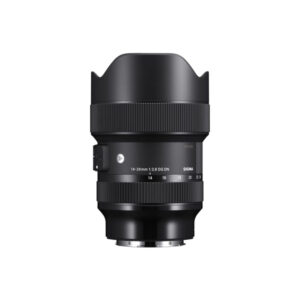
Portrait photography lives and dies on two things: how cleanly your subject separates from the background, and how naturally skin, eyes and hair are rendered. The camera body matters less here than the lens in front of it, which is exactly why so many photographers in Bangladesh reach for Sigma glass when they get serious about portraits. Sigma’s Art line delivers the wide apertures, sharpness and creamy background blur that portrait work demands, usually at a price that undercuts the camera brands’ own equivalents.
This guide walks through the best Sigma lenses for portrait photography available in Bangladesh, from the full-frame Art primes to compact APS-C options, so you can match a lens to your camera, your style and your budget. Throughout, we’ve kept the advice practical for local conditions and local pricing, and where availability or warranty matters, we’ve pointed you toward Hope Enterprises, the official Sigma distributor in Bangladesh.
What makes a lens good for portraits
Before the model names, it helps to know what you’re actually looking for.
A fast maximum aperture. Portrait lenses are usually f/1.4 to f/2.8. A wider aperture lets in more light and, more importantly, throws the background out of focus so your subject pops. The f/1.4 primes in Sigma’s Art line are built precisely for this.
A flattering focal length. On a full-frame camera, 50mm to 135mm is the classic portrait range. 85mm is often called the “portrait focal length” because it compresses features pleasantly and keeps a comfortable working distance. On an APS-C body, remember the crop factor — a 56mm lens behaves like roughly 85mm, which is ideal.
Smooth bokeh and good skin rendering. Sharpness matters, but so does the character of the out-of-focus areas. Sigma’s Art primes are known for rounded, gentle bokeh and colour rendering that keeps skin tones looking natural rather than clinical.
Reliable autofocus. Eye-detection autofocus on modern mirrorless cameras is only as good as the lens motor feeding it. Sigma’s newer DG DN lenses use stepping motors that track a moving subject’s eye accurately.
Sigma 85mm f/1.4 DG DN Art — the portrait specialist
If you shoot portraits on a full-frame Sony E-mount or L-mount body and you want the single best result, this is the lens. The 85mm f/1.4 DG DN Art gives you tight, flattering framing, a shallow depth of field that melts backgrounds into colour, and the kind of eye sharpness that stands out even when printed large.
What makes the mirrorless DG DN version special is how much lighter and smaller it is than the old DSLR-era 85mm Art, without giving up image quality. For headshots, couple portraits, and bridal work, it’s hard to beat. It’s the lens most professional portrait and wedding shooters in Bangladesh graduate toward once they’ve outgrown a kit setup.
The trade-off is reach and price — 85mm is a little long indoors in tight spaces, and it sits at the premium end of the range. But for anyone whose main job is people, it earns its place.
Sigma 50mm f/1.4 DG DN Art — the everyday portrait workhorse
The 50mm f/1.4 DG DN Art is the most versatile lens on this list. On full frame, 50mm sits close to the natural perspective of the human eye, so it flatters faces without the compression of an 85mm and still delivers gorgeous subject separation wide open.
It’s the lens to buy if you want one prime that handles portraits, environmental shots that include some background context, events, and general everyday photography. Half-length portraits, lifestyle sessions, and street-style portraiture all suit 50mm perfectly. The rendering is clean and modern, autofocus is quick and quiet, and the size is manageable for a full-day shoot.
For many photographers building a kit, a 50mm f/1.4 is the smartest first “serious” portrait lens — flexible enough to justify the spend before you commit to a dedicated 85mm.
Sigma 35mm f/1.4 DG DN Art — for environmental portraits
35mm is wider than the classic portrait range, and that’s the point. The 35mm f/1.4 DG DN Art is built for environmental portraits — pictures that place a person inside their world rather than isolating them completely. Think a craftsman at his workbench, a chef in the kitchen, or a full-body fashion frame with the street behind.
You get the same f/1.4 light-gathering and background separation as the other Art primes, but with room to show context. It’s also an excellent low-light lens for events and indoor work where an 85mm would be too tight. Just be mindful of perspective: don’t fill the frame with a face at 35mm, or you’ll exaggerate features. Step back and use the width the way it’s intended.
APS-C options: 30mm and 56mm f/1.4 DC DN Contemporary
Not everyone shoots full frame, and Sigma has excellent, affordable primes for crop-sensor bodies — a big deal for photographers in Bangladesh building a kit without a full-frame budget.
The Sigma 56mm f/1.4 DC DN Contemporary is the standout portrait pick for APS-C. On a Sony, Fujifilm or Canon crop body it delivers an effective field of view around 85mm — the ideal portrait length — with a genuinely wide f/1.4 aperture, superb sharpness and lovely bokeh. Gram for gram and taka for taka, it’s one of the best portrait-value lenses on the market.
The Sigma 30mm f/1.4 DC DN Contemporary gives an effective ~45–48mm view, making it the crop-sensor equivalent of a nifty-fifty: great for half-length portraits, everyday shooting and low light. Pair the 30mm and 56mm and you have a complete two-lens portrait kit for a fraction of full-frame prices.
Prime or zoom for portraits?
Most dedicated portrait shooters prefer primes for the wider aperture and cleaner bokeh. But if you want flexibility — and you’re covering events or weddings where you can’t always move — the Sigma 24-70mm f/2.8 DG DN Art and Sigma 70-200mm f/2.8 DG DN OS Sports both produce beautiful portraits at f/2.8. You lose a stop of blur compared with an f/1.4 prime, but you gain framing freedom. Many working photographers carry one f/2.8 zoom plus an 85mm prime and cover almost everything.
Which Sigma portrait lens should you buy?
| Your situation | Best Sigma pick | Why |
| Full-frame, portraits are your main work | 85mm f/1.4 DG DN Art | Classic focal length, best subject separation |
| Full-frame, want one flexible prime | 50mm f/1.4 DG DN Art | Natural perspective, everyday versatility |
| Full-frame, context in the frame | 35mm f/1.4 DG DN Art | Environmental and full-body portraits |
| APS-C, best portrait value | 56mm f/1.4 DC DN | ~85mm equivalent, compact and affordable |
| APS-C, everyday + portraits | 30mm f/1.4 DC DN | ~45mm equivalent, great low-light all-rounder |
| Need zoom flexibility | 24-70mm f/2.8 or 70-200mm f/2.8 | f/2.8 blur with framing freedom |
Prices in Bangladesh shift with import duty and exchange rates, so confirm the current BDT price and mount availability before you buy. Hope Enterprises lists up-to-date pricing for the full Sigma range and can advise which version matches your exact camera mount.
Tips for shooting portraits in Bangladesh
A great lens is only half the picture. A few practical notes:
- Use the light you have. Soft window light or open shade in the early morning and late afternoon flatters skin far more than harsh midday sun — useful given how strong the light gets here for much of the year.
- Shoot wide open, but not always. f/1.4 is stunning, but for group portraits stop down to f/2.8–f/4 so more than one face stays sharp.
- Nail focus on the near eye. With such shallow depth of field, eye-detection autofocus is your friend — keep it on.
- Mind the humidity. Lens fungus is a real risk in Bangladesh’s climate, so store your Sigma glass in a dry cabinet. (More on that in our lens-care guide.)
Going longer: 105mm and 135mm for tighter portraits
If you love the compressed, isolated look of long-lens portraits, Sigma has two more Art primes worth knowing. The Sigma 105mm f/1.4 DG DN Art — nicknamed the “Bokeh Master” — produces an extraordinarily shallow depth of field and dreamy background blur that’s hard to match. It’s large and heavy, and it demands accurate focus because the plane of sharpness is so thin, but for studio and outdoor headshots where you want the subject to float against a wash of colour, it’s spectacular.
The Sigma 135mm f/1.8 DG DN Art is a more practical long portrait lens: the extra reach flattens features beautifully and lets you work from a comfortable distance, which is ideal for candid portraits and events where you don’t want to crowd your subject. Both lenses reward good technique, and both sit at the premium end of the range — reach for them when 85mm isn’t quite long enough for the look you want.
The role of a macro lens in portraits
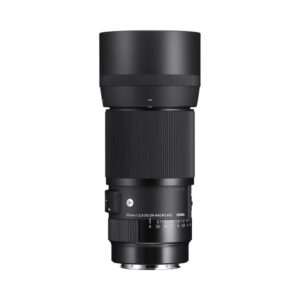
It’s worth a mention that the Sigma 105mm f/2.8 DG DN Macro Art, while built for close-up work, doubles as a capable portrait lens. The 105mm focal length is flattering, the sharpness is excellent, and you gain the ability to shoot detailed close-ups — jewellery, hands, henna, textures — during the same session. For wedding and event photographers in Bangladesh who want one lens that covers tight portraits and detail shots, it’s a clever, versatile addition to the bag.
Focal length and crop factor, made simple
One point trips up a lot of new buyers, so it’s worth spelling out. Focal lengths like 50mm or 85mm describe how a lens behaves on a full-frame camera. Put the same lens on an APS-C (crop-sensor) body and the field of view narrows, as if the focal length were roughly 1.5x longer. That’s why a 56mm lens on APS-C frames like an 85mm portrait lens, and why a 30mm behaves like a nifty-fifty. When you read “effective focal length,” that’s the crop-adjusted number — the one that tells you how tight your portrait will actually look. Match the number to the framing you want, and remember to buy the lens version made for your camera’s sensor and mount.
Frequently asked questions
Which Sigma lens is best for beginner portraits? On a full-frame camera, the 50mm f/1.4 DG DN Art is the most forgiving and flexible starting point. On an APS-C body, the 56mm f/1.4 DC DN gives classic portrait framing at a very approachable price.
Is f/1.4 always better than f/2.8 for portraits? Not always. f/1.4 gives more background blur and better low-light performance, but the depth of field is so shallow that even single-subject portraits can lose sharpness if focus drifts. Many photographers shoot their f/1.4 primes at around f/2 for a safer margin while keeping beautiful bokeh, and stop down to f/4 for groups.
Do I need a full-frame camera for good portraits? No. APS-C cameras paired with the Sigma 56mm or 30mm f/1.4 produce professional-looking portraits. Full frame offers a little more background separation and low-light headroom, but the lens and your lighting matter more than sensor size.
Will a Sony E-mount Sigma lens fit my Canon or Nikon camera? No — always buy the version made for your specific mount, and confirm compatibility with the seller before you order.
Buy genuine Sigma portrait lenses in Bangladesh
When you invest in a portrait lens, buy the genuine article with proper warranty support. Grey-market imports often carry no local coverage, and a fault on an f/1.4 Art lens is expensive to fix out of pocket.
As the authorised Sigma distributor in the country, Hope Enterprises supplies original Sigma lenses with official warranty and nationwide delivery across Bangladesh. Whether you’re picking up your first 56mm f/1.4 or upgrading to the 85mm f/1.4 Art, ordering through Hope Enterprises means you get authentic glass, local after-sales support, and honest advice on the right lens for your camera.
Final thoughts
For portraits, your lens choice shapes the look more than almost any other gear decision. If you shoot full frame and portraits are your priority, the 85mm f/1.4 DG DN Art is the benchmark; the 50mm f/1.4 is the flexible everyday choice; and the 35mm f/1.4 opens up environmental storytelling. On APS-C, the 56mm and 30mm f/1.4 Contemporary primes deliver professional results without the full-frame spend. Match the focal length to your style, buy genuine, and let the fast Sigma glass do the rest.