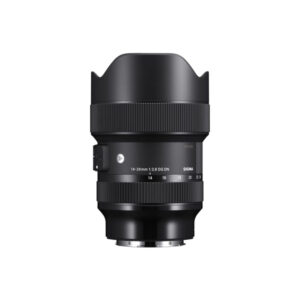
Wedding photography in Bangladesh can be challenging, exciting, and highly demanding at the same time. A photographer may start the day capturing bridal preparations in a small room, move to an outdoor Gaye Holud ceremony in bright daylight, photograph an indoor Akhd or Nikah in low light, and finish with a large reception where hundreds of guests are moving around the venue.
Because every part of a Bangladeshi wedding looks and feels different, choosing the best lens for wedding photography in Bangladesh is not simply about buying the most expensive lens available.
You need the right combination of focal length, aperture, camera body, autofocus performance, and flexibility.
For some photographers, a versatile 24-70mm zoom is the perfect starting point. Others prefer fast prime lenses such as 35mm, 50mm, or 85mm for low-light photography and beautiful background separation. Professional wedding photographers may carry two camera bodies with different lenses so they can move between wide scenes and close-up moments instantly.
In this complete guide from Hope Enterprises Bangladesh, we will explain the best focal lengths for wedding photography, recommended SIGMA lenses, full-frame and APS-C setups, and how to build a practical camera kit for Bangladeshi weddings.
Why Lens Choice Matters in Wedding Photography
A wedding photographer does not get a second chance to capture important moments.
The bride entering the venue, the exchange of rings, emotional reactions from parents, candid laughter between family members, and spontaneous moments on the dance floor may happen only once.
Your lens should help you capture these moments instead of slowing you down.
A good wedding photography lens should provide some combination of:
- Reliable low-light performance
- Fast autofocus
- Useful focal-length coverage
- Good subject separation
- Sharp image quality
- Comfortable handling
- Flexibility in crowded locations
- Strong performance for portraits and candid photography
Bangladeshi weddings make flexibility especially important because venues can range from small indoor spaces to large marquees, hotels, community halls, gardens, and outdoor wedding setups.
This is why most experienced wedding photographers build their kits around more than one focal length.
Understanding Focal Length for Wedding Photography
Before choosing a lens, you need to understand what different focal lengths actually do.
24mm: Wide Venue and Group Photography
A 24mm focal length provides a wide field of view on a full-frame camera.
It is useful when photographing:
- Wedding venues
- Large family groups
- Stage setups
- Bridal entrances
- Gaye Holud decorations
- Environmental portraits
- Dance floors
- Indoor rooms with limited space
A wide lens lets photographers include more of the surroundings and tell a broader story.
However, you should avoid placing faces too close to the edges of an ultra-wide composition because perspective distortion can make people look unnatural.
For most wedding photographers, 24mm works best for establishing shots and situations where space is limited.
35mm: One of the Best Wedding Storytelling Focal Lengths
The 35mm focal length is extremely useful for documentary-style wedding photography.
It is wide enough to show the environment but not so wide that every photograph feels like a venue shot.
A 35mm lens works well for:
- Bridal preparation
- Groom preparation
- Mehendi ceremonies
- Indoor family moments
- Candid photography
- Couple photographs
- Environmental portraits
- Reception coverage
- Low-light events
A fast 35mm prime can become particularly valuable during evening weddings.
The SIGMA 35mm F1.4 DG DN Art is an excellent example for compatible full-frame mirrorless cameras. Its bright F1.4 aperture allows photographers to work in lower-light conditions while also creating attractive subject separation.
For photographers who prefer a storytelling or photojournalistic style, 35mm can become one of the most frequently used focal lengths in the entire wedding kit.
50mm: The Versatile Standard Prime
The 50mm lens sits between wide-angle storytelling and traditional portrait photography.
It produces a natural-looking perspective that works for many situations.
A 50mm lens can be used for:
- Couple portraits
- Individual portraits
- Candid photography
- Family interactions
- Indoor ceremonies
- Detail photography
- Reception coverage
- Lifestyle wedding photography
For full-frame users, a lens such as the SIGMA 50mm F1.4 DG DN Art can provide a useful balance of low-light performance and subject isolation.
The biggest advantage of a 50mm prime is versatility.
It is not extremely wide, and it is not extremely tight.
For a photographer who wants to start using prime lenses but is unsure whether to choose a 35mm or 85mm lens, 50mm can be a practical middle ground.
85mm: The Classic Wedding Portrait Lens
If bridal portraits and couple photography are an important part of your work, the 85mm focal length deserves serious consideration.
An 85mm lens gives photographers a flattering perspective and strong background compression.
It is ideal for:
- Bridal portraits
- Groom portraits
- Couple portraits
- Fashion-style wedding photography
- Stage portraits
- Emotional candid photographs
- Detail shots from a distance
The SIGMA 85mm F1.4 DG DN Art is particularly suitable for portrait-oriented wedding photography.
Its F1.4 maximum aperture allows photographers to create strong separation between the subject and the background.
This is useful at busy Bangladeshi wedding venues where backgrounds may contain guests, decorations, chairs, lights, banners, and other distractions.
A shallow depth of field can help simplify that background and place more attention on the bride or groom.
However, an 85mm lens requires more working distance than a 35mm or 50mm lens.
In a small room, photographers may find themselves unable to move far enough away from the subject.
For that reason, 85mm works best when paired with another wider lens.
70-200mm: Best for Candid and Stage Photography
There are many moments during a wedding when getting physically close to the subject is impossible or undesirable.
For example, you may be photographing:
- A ceremony from the back of a hall
- Emotional family reactions
- Stage photography
- Candid expressions
- Couple entrances
- Speeches
- Outdoor portraits
- Reception activities
This is where a 70-200mm telephoto zoom becomes extremely useful.
The SIGMA 70-200mm F2.8 DG DN OS Sports is designed for full-frame mirrorless systems and provides a professional telephoto range with a constant F2.8 aperture.
A 70-200mm allows the photographer to remain at a distance while still producing tight compositions.
This is particularly useful for candid photography because subjects often behave more naturally when the photographer is not standing directly in front of them.
The compressed perspective of longer focal lengths can also create beautiful portraits with visually pleasing backgrounds.
Best All-Round Lens for Wedding Photography
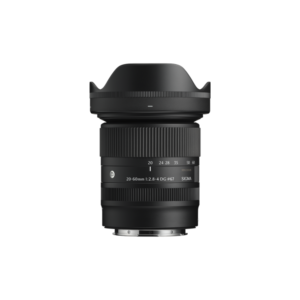
If you can carry only one lens, a 24-70mm F2.8 standard zoom is one of the safest choices.
The SIGMA 24-70mm F2.8 DG DN II Art covers several important wedding photography focal lengths in a single lens.
At approximately 24mm, you can capture:
- Venue shots
- Large groups
- Wide ceremony photographs
- Environmental portraits
Around 35-50mm, you can photograph:
- Candids
- Family interactions
- Couple photographs
- Preparations
- General event coverage
At 70mm, you can create:
- Tighter portraits
- Detail photographs
- Close candid compositions
The constant F2.8 aperture also provides better low-light performance than many variable-aperture standard zooms.
For photographers covering weddings alone, this flexibility can be extremely valuable.
Instead of constantly changing lenses while important moments are happening, you can quickly zoom to the composition you need.
For many photographers building their first professional full-frame wedding setup, the 24-70mm F2.8 is a logical foundation.
Prime Lens vs Zoom Lens for Weddings
One of the biggest questions for wedding photographers is whether to choose prime lenses or zoom lenses.
The answer is that both have advantages.
Advantages of Zoom Lenses
Zoom lenses provide flexibility.
A photographer using a 24-70mm lens can quickly move from a wide group photo to a tighter portrait without physically changing position or changing lenses.
Zoom lenses are particularly useful for:
- Fast ceremonies
- Large receptions
- Group photography
- Crowded stages
- Solo wedding photographers
- Unpredictable moments
Advantages of Prime Lenses
Prime lenses have a fixed focal length but often provide wider maximum apertures.
An F1.4 prime allows significantly more light into the camera than an F2.8 zoom.
This makes prime lenses useful for:
- Low-light wedding photography
- Indoor ceremonies
- Night receptions
- Artistic portraits
- Strong background blur
- Documentary-style photography
A professional wedding photographer does not necessarily need to choose between zooms and primes.
A combination of both is usually the most practical solution.
Recommended Full-Frame Wedding Camera Setup
A strong professional setup can start with two full-frame mirrorless camera bodies.
Camera Body 1: 24-70mm F2.8
Keep the SIGMA 24-70mm F2.8 DG DN II Art on your primary camera.
Use this setup for:
- Main ceremony coverage
- Groups
- Wide scenes
- Couple photographs
- Family interactions
- General event photography
Camera Body 2: 85mm F1.4
Keep a SIGMA 85mm F1.4 DG DN Art on your second body.
Use it for:
- Bridal portraits
- Groom portraits
- Candid moments
- Couple portraits
- Background separation
- Low-light situations
This two-body combination covers a large percentage of wedding photography requirements.
The photographer can immediately switch between cameras instead of changing lenses.
Alternative Two-Camera Setup: 35mm + 85mm
Photographers who prefer prime lenses can use:
Camera 1: 35mm F1.4
Camera 2: 85mm F1.4
This is a classic combination for documentary wedding photography.
The 35mm captures the story and surroundings.
The 85mm captures expressions and portraits.
This setup can produce excellent results in low-light environments because both lenses provide large apertures.
However, prime lenses require photographers to move more frequently to adjust composition.
In crowded wedding venues, this may be more difficult than using a zoom.
Best Wedding Photography Setup for APS-C Cameras
You do not need a full-frame camera to begin photographing weddings professionally.
Modern APS-C mirrorless cameras can produce excellent results when paired with the right lenses.
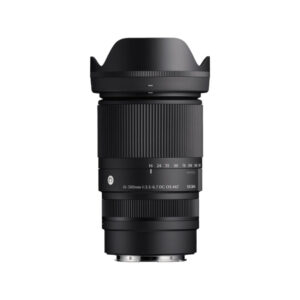
One useful option is the SIGMA 18-50mm F2.8 DC DN Contemporary.
On a typical 1.5x APS-C system, this provides an angle of view similar to approximately 27-75mm on full frame.
That makes it useful for:
- General ceremony coverage
- Family photographs
- Couple photography
- Portraits
- Events
- Wedding preparation
- Reception photography
For portraits, APS-C photographers can pair it with the SIGMA 56mm F1.4 DC DN Contemporary.
On a 1.5x crop-sensor camera, 56mm gives a field of view similar to approximately 84mm on full frame.
That makes it an excellent option for bridal and couple portraits.
A practical APS-C wedding setup can therefore be:
Camera 1: SIGMA 18-50mm F2.8 DC DN Contemporary
Camera 2: SIGMA 56mm F1.4 DC DN Contemporary
For photographers who are building their wedding photography business gradually, this can be a compact and capable setup.
Best Lens for Gaye Holud Photography
Gaye Holud ceremonies usually involve bright colors, decorations, movement, family groups, and candid interactions.
A standard zoom is extremely useful because you may need to switch quickly between wide scenes and close moments.
A 24-70mm lens on full frame or an 18-50mm lens on APS-C can work particularly well.
For outdoor portraits, you can switch to an 85mm or similar portrait focal length for stronger background separation.
Best Lens for Mehendi Photography
Mehendi events can take place in smaller indoor spaces where photographers have limited room to move.
A 35mm focal length is particularly useful here.
It allows you to capture the bride while still showing decorations, family members, and the atmosphere around her.
A fast F1.4 aperture can also help when ambient light levels are low.
Best Lens for Nikah or Akhd Photography
During a Nikah or Akhd ceremony, photographers often need to work quietly without constantly moving around.
A 24-70mm zoom provides flexibility for general coverage.
A longer lens such as a 70-200mm can help capture expressions from a respectful distance.
A fast prime can also be valuable if the ceremony takes place indoors with limited lighting.
Best Lens for Wedding Reception Photography
Large receptions can require almost every focal length in your bag.
Use a wide or standard zoom for:
- Venue photographs
- Stage photographs
- Large groups
- Entrances
- Guest coverage
Use an 85mm or 70-200mm for:
- Couple portraits
- Emotional reactions
- Candid shots
- Stage close-ups
- Speeches
For dim reception venues, a 35mm F1.4 or 50mm F1.4 can help when you want to work with ambient lighting.
What Aperture Is Best for Wedding Photography?
There is no single aperture that works for every wedding photograph.
F1.4-F2
Excellent for:
- Individual portraits
- Low-light photography
- Creative images
- Strong background blur
However, photographers need to be careful with focus because depth of field can become very shallow.
F2.8
A very useful aperture for professional zoom lenses.
It provides a good balance between light gathering, subject separation, and usable depth of field.
F4-F5.6
Useful for:
- Couple portraits where both faces need to remain sharp
- Smaller groups
- General event photography
F5.6-F8
Often better for:
- Large family groups
- Formal wedding groups
- Stage photographs involving many people
For group photography, using an extremely wide aperture can cause people in different rows to become out of focus.
Recommended Camera Settings for Wedding Photography
Camera settings should always change according to lighting and movement, but a few principles can help.
Use a Fast Enough Shutter Speed
Wedding subjects are constantly moving.
For general photography, avoid allowing your shutter speed to become unnecessarily slow.
For entrances, dancing, and fast movement, use a faster shutter speed to reduce motion blur.
Use Continuous Autofocus
Modern mirrorless cameras provide continuous autofocus and eye detection that can be extremely helpful for weddings.
Use continuous autofocus for moving subjects rather than relying only on single-shot focus.
Shoot RAW
RAW files provide greater flexibility when editing exposure, white balance, highlights, and shadows.
This can be especially useful at wedding venues with mixed lighting.
Use Dual Memory Cards When Available
Wedding photography is paid client work.
If your camera supports dual-card recording, consider recording files to both cards for additional security.
Losing wedding photographs because of memory-card failure can be extremely damaging professionally.
Don’t Forget Backup Equipment
A professional wedding photography setup should not depend on one camera, one battery, or one memory card.
Consider carrying:
- A backup camera body
- Extra batteries
- Extra memory cards
- Backup lighting
- Lens-cleaning equipment
- Multiple lenses
- Battery chargers
- A reliable camera bag
Wedding photography requires preparation for equipment failure as well as creative photography.
How to Choose the Right Wedding Lens for Your Style
There is no universal wedding lens kit for every photographer.
Choose your equipment according to how you work.
Choose 24-70mm if:
You want maximum versatility and frequently work in changing conditions.
Choose 35mm if:
You prefer documentary-style images showing people within their environment.
Choose 50mm if:
You want a natural perspective and one versatile prime lens.
Choose 85mm if:
Portraits, bridal images, and subject separation are your priority.
Choose 70-200mm if:
You frequently photograph candid moments or need to work from a distance.
The best professional kit often combines several of these focal lengths.
Buying Original SIGMA Lenses in Bangladesh
Wedding photography equipment is a long-term professional investment.
A lens may be used at dozens or even hundreds of events, making authenticity, reliability, warranty, and after-sales support important considerations.
Hope Enterprises Bangladesh offers SIGMA imaging products for photographers and creators in Bangladesh.
When selecting a SIGMA lens, always confirm:
- The exact lens model
- Camera mount compatibility
- APS-C or full-frame compatibility
- Current product availability
- Warranty coverage
- After-sales support
Buying from a reliable source can provide greater confidence when your photography business depends on your equipment performing correctly at important events.
Protecting Your Wedding Photography Lenses in Bangladesh
Humidity is another important consideration for photographers in Bangladesh.
Camera lenses that remain in humid environments for long periods can be vulnerable to moisture-related problems, including lens fungus.
Professional photographers should consider storing equipment in a controlled environment or dry cabinet when it is not being used.
Keep front and rear lens caps attached during storage and regularly inspect equipment.
Proper storage is especially important for photographers who invest in several professional lenses.
Final Thoughts
Choosing the best lens for wedding photography in Bangladesh depends on your camera system, shooting style, venue conditions, and the types of images you want to create.
For photographers looking for maximum versatility, a 24-70mm F2.8 is one of the strongest starting points.
For beautiful bridal and couple portraits, an 85mm F1.4 can create excellent subject separation.
For documentary-style photography and low-light receptions, a 35mm F1.4 provides an excellent combination of environment, storytelling, and low-light capability.
Photographers who need extra reach for candid and stage photography can add a 70-200mm F2.8.
APS-C photographers can build an excellent wedding kit around an 18-50mm F2.8 standard zoom combined with a 56mm F1.4 portrait prime.
Instead of trying to buy every lens at once, build your kit around the type of weddings you actually photograph.
Start with a versatile standard zoom, add a fast portrait prime, and then expand into wider or longer lenses as your photography business grows.
For photographers looking for genuine SIGMA lenses, compatible models, product information, and professional imaging solutions, explore the SIGMA range available through Hope Enterprises Bangladesh.
Frequently Asked Questions
A 24-70mm F2.8 is one of the best all-round options for full-frame wedding photographers because it covers wide scenes, groups, candids, and portraits. Photographers can combine it with an 85mm F1.4 for dedicated portrait photography.
Choose 35mm if you prefer wider documentary photographs that show more of the environment. Choose 50mm if you want a more natural perspective with slightly stronger subject separation.
Yes. An 85mm lens is particularly useful for bridal portraits, couple photography, candid images, and photographs requiring strong background separation.
A 24-70mm can cover a large portion of a wedding day, especially for photographers working with one camera. However, adding a fast prime or telephoto zoom can improve low-light and portrait capabilities.
Photographers can explore genuine SIGMA imaging products and compatible lens options through Hope Enterprises Bangladesh. Always confirm the required camera mount and sensor format before purchasing.