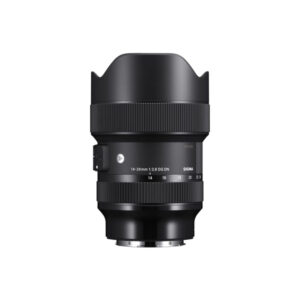
Bangladesh’s geography packs an unusual variety into one country — the world’s longest natural sea beach at Cox’s Bazar, the mangrove wilderness of the Sundarbans, the tea gardens of Sylhet, and the hill tracts of Bandarban. Each location demands something slightly different from a lens: wide framing for sweeping beach and hill vistas, reach for wildlife and boat shots in the Sundarbans, and enough low-light performance for golden hour and indoor market scenes. This guide breaks down which Sigma lenses actually earn a place in a travel bag, and why weight and versatility matter as much as raw sharpness when you’re carrying gear for a week.
What Makes a Lens Travel-Friendly
A studio or wildlife lens is judged almost entirely on optical performance. A travel lens is judged on a second axis too: how much you’ll actually want to carry it after eight hours on your feet. The best travel lenses hit a sweet spot of a useful zoom range, compact size, weather resistance for unpredictable coastal or forest weather, and fast enough apertures to handle dim temple interiors or evening markets without a tripod.
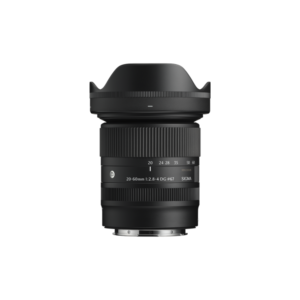
Best All-Rounder: Sigma 18-50mm f/2.8 DC DN
For APS-C mirrorless shooters, the Sigma 18-50mm f/2.8 is close to an ideal single-lens travel kit. It covers wide-angle beach and landscape shots through to comfortable portrait framing, all at a constant f/2.8 that keeps exposure consistent whether you’re shooting a bright Cox’s Bazar sunrise or a shaded Sundarbans boat deck. Its compact, lightweight build means it barely adds bulk to a travel bag, and it pairs naturally with small mirrorless bodies that Bangladeshi travelers are increasingly choosing precisely for their portability.
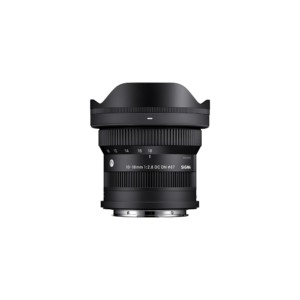
Best for Wide Landscapes: Sigma 16mm f/1.4 DC DN
Cox’s Bazar’s long horizon and Bandarban’s layered hills both reward genuinely wide framing. The Sigma 16mm f/1.4 delivers a dramatic wide field of view with an aperture fast enough for handheld sunset and blue-hour shots along the beach, where a tripod isn’t always practical on soft sand or amid crowds. It’s also a strong choice for interior shots of mosques, temples, and heritage buildings where you can’t step back far enough to fit the whole frame.
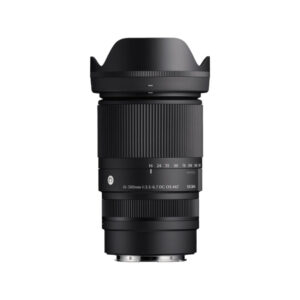
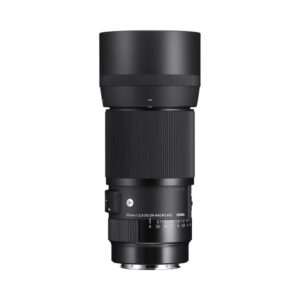
Best for Sundarbans Wildlife & Boat Trips: Sigma 100-400mm or 150-600mm
The Sundarbans is where reach becomes essential rather than optional. Spotting a Royal Bengal Tiger track, a saltwater crocodile basking on a bank, or birds along the tidal channels all require a lens that can close the distance from a moving boat where you cannot physically approach the subject. A Sigma telephoto zoom in the 100-400mm or 150-600mm range gives that reach while remaining manageable to handhold on a rocking boat deck — a genuine advantage over heavier prime telephotos that are harder to stabilize in that environment.
Best for Low Light & Portraits on the Road: Sigma 30mm f/1.4 or 56mm f/1.4
Evening markets, tea stalls, and candid portraits of people along the journey all benefit from a fast prime. The Sigma 30mm f/1.4 works well for environmental portraits and street scenes with some background context, while the 56mm f/1.4 compresses the background more for tighter, cinematic-looking portraits of fellow travelers or local subjects — both perform confidently once the light starts to fade, which is often when travel photography gets most interesting.
Comparing the Top Travel Lens Choices
| Lens | Best For | Weight Class |
| Sigma 18-50mm f/2.8 | All-round single-lens travel kit | Very Light |
| Sigma 16mm f/1.4 | Wide beach & landscape scenes | Light |
| Sigma 100-400mm | Sundarbans wildlife & boat shots | Moderate |
| Sigma 30mm / 56mm f/1.4 | Low-light portraits & street scenes | Very Light |
Building a Two-Lens Kit for a Bangladesh Trip
Most travelers don’t want to carry four lenses. A practical two-lens combination pairs the 18-50mm f/2.8 as the everyday walk-around option with either the 100-400mm for a Sundarbans-focused itinerary or the 16mm f/1.4 for a beach-and-hills route through Cox’s Bazar and Bandarban. This keeps the kit under a manageable weight while still covering nearly every situation a domestic trip will throw at it.
Practical Travel Tips for Lens Care on the Move
- Pack lenses in a padded insert bag rather than loose in a backpack to survive rough bus or boat rides.
- Carry a rain cover for Sundarbans and monsoon-season coastal trips.
- Keep a UV or protective filter on the front element when shooting near sand or sea spray.
- Use a lens hood at all times outdoors — it protects the glass as much as it controls flare.
- Let equipment acclimatize before shooting after long AC bus or car rides in humid weather.
Planning Your Lens Kit Around the Itinerary, Not the Gear Bag
A common mistake among newer travel photographers is packing every lens they own and deciding what to use once they arrive. A better approach starts from the itinerary itself: list the specific locations and likely subjects for each day — sunrise over the beach, a boat trip through mangrove channels, an evening at a local market — and match lenses to those moments before the trip, not during it. This turns lens selection into a planning step rather than a last-minute decision made while already tired from travel, and it usually results in carrying less gear overall, since most days genuinely only call for one or two focal lengths.
Sundarbans-Specific Shooting Considerations
The Sundarbans deserves special attention beyond just lens choice, because the shooting conditions there are unlike anywhere else in Bangladesh. Boats move constantly, light changes quickly under the mangrove canopy, and wildlife sightings are often brief and at a distance that keeps growing as the boat drifts. A monopod or simply bracing the telephoto lens against the boat’s railing helps stabilize longer focal lengths without the impracticality of a full tripod on a moving deck. It’s also worth keeping a shorter lens mounted and ready on a second body or in an easily accessible pocket, since not every worthwhile shot in the Sundarbans is a distant wildlife sighting — riverside village life, boat crews at work, and the mangrove landscape itself often call for a wider frame than the telephoto allows.
Cox’s Bazar and Coastal Light: Timing Your Shots
Cox’s Bazar’s long, flat beach and open horizon make it especially sensitive to time of day. Midday light tends to flatten color and create harsh shadows, while the hour after sunrise and before sunset produces the warm, directional light that makes beach photography genuinely striking. A fast wide-angle lens like the Sigma 16mm f/1.4 earns its place specifically in these low-light windows, when a smaller-aperture kit lens would need a much higher ISO to keep up. Photographers planning a Cox’s Bazar trip around these golden-hour windows, rather than shooting only whenever convenient during the day, will typically get noticeably stronger results from the same gear.
Packing Checklist for a Bangladesh Photography Trip
- Two-lens kit matched to the specific itinerary (see combinations above).
- Padded lens case or dedicated inserts inside your main travel bag.
- Rain cover, especially for Sundarbans or monsoon-season coastal trips.
- UV filter fitted before departure to protect against sand and sea spray.
- Extra memory cards and batteries — charging access can be inconsistent in more remote areas.
- Silica gel packets for humidity control inside the camera bag overnight.
Buying Genuine Sigma Travel Lenses in Bangladesh
A travel lens is only as reliable as the retailer behind it. Hope Enterprises, the official Sigma distributor in Bangladesh, supplies genuine lenses with full warranty coverage, which matters most precisely when you’re relying on gear far from home during a trip.
Balancing Video and Photography Needs on the Same Trip
Many travelers now shoot both stills and video on the same trip, which adds another layer to lens selection. Fast constant-aperture lenses like the Sigma 18-50mm f/2.8 handle this dual role well, since the same aperture and focal range that suits landscape photography also produces smooth, cinematic video footage without needing a lens swap between mediums. For creators prioritizing vlog-style video specifically, the wider field of view of the 16mm f/1.4 keeps a handheld or gimbal shot stable in frame even while walking, which is harder to achieve with a longer focal length.
Frequently Asked Questions
The Sigma 18-50mm f/2.8 for general use, or the 16mm f/1.4 if wide sunrise and sunset shots are the priority.
Yes — wildlife sightings happen at a distance, so a 100-400mm or longer telephoto zoom is strongly recommended.
APS-C lenses like the 18-50mm f/2.8 are generally lighter and more compact, making them a better fit for travel unless you already shoot full-frame.
Use a UV filter, keep the lens capped between shots, and wipe the front element with a microfiber cloth regularly.
Hope Enterprises is the official Sigma distributor in Bangladesh, offering authentic lenses with warranty support.