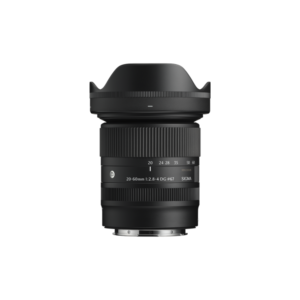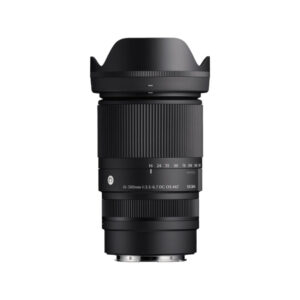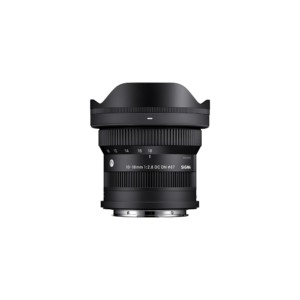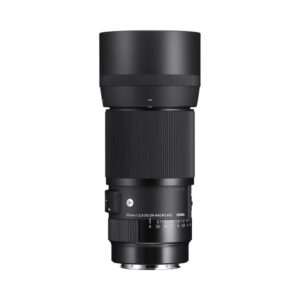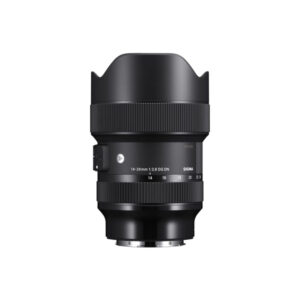
If you shoot on an APS-C mirrorless camera — whether Sony E-mount, Fujifilm X-mount, or Canon EF-M — you’ve almost certainly come across Sigma’s famous “F1.4 trio”: the 16mm F1.4, 30mm F1.4, and 56mm F1.4 DC DN Contemporary lenses. Together, these three primes form one of the most complete and affordable lens systems ever built for crop-sensor cameras, covering wide-angle, standard, and short-telephoto focal lengths at a bright, constant f/1.4 aperture.
But if you’re deciding where to start — or whether you need all three — this Sigma F1.4 lens comparison breaks down exactly how the 16mm, 30mm, and 56mm differ, what each one is best suited for, and which order makes the most sense to buy them in.
Understanding the Sigma Trio Lenses as a System
Sigma designed these three lenses to work together as a complete kit. On an APS-C sensor, their actual field of view (using the standard 1.5x crop factor) works out to:
- 16mm F1.4 → approximately 24mm full-frame equivalent (wide-angle)
- 30mm F1.4 → approximately 45mm full-frame equivalent (standard/normal)
- 56mm F1.4 → approximately 84mm full-frame equivalent (portrait telephoto)
This spread mirrors the classic 24mm-45mm-85mm prime lens combination that professional photographers have relied on for decades, giving APS-C shooters a genuinely professional-grade toolkit without needing to switch to full-frame.
Sigma 16mm F1.4: The Wide-Angle Workhorse
The Sigma 16mm F1.4 is the widest of the trio and typically the most popular starting point for landscape, architecture, astrophotography, and vlogging.
Best for: – Landscape and cityscape photography – Astrophotography, thanks to the bright f/1.4 aperture capturing more light in low-light night skies – Vlogging and run-and-gun video, where the wide field of view keeps the subject in frame at arm’s length – Interior and real estate photography
Why photographers choose it first: its versatility. A wide-angle f/1.4 lens is genuinely rare, and the ability to shoot handheld night scenes or Milky Way shots without a tripod is a major draw for content creators and hobbyist astrophotographers alike.
Sigma 30mm F1.4: The Everyday Standard Lens
Sitting almost exactly at a “normal” field of view once you account for the APS-C crop factor, the Sigma 30mm F1.4 is often recommended as the most naturally balanced lens of the three — neither wide nor tight, closely matching what the human eye perceives.
Best for: – Everyday walk-around and street photography – Environmental portraits that include background context – Food, lifestyle, and product photography for content creators – General-purpose shooting when you don’t want to think about focal length
Why photographers choose it first: its sheer versatility as a single “does everything reasonably well” lens, making it the safest first purchase for someone who only wants to own one Sigma prime.
Sigma 56mm F1.4: The Portrait Specialist
The longest lens in the trio, the Sigma 56mm F1.4, is built specifically with portraiture in mind. Its 84mm-equivalent field of view produces flattering facial proportions and strong subject-background separation.
Best for: – Headshots and portrait sessions – Events and candid photography from a comfortable distance – Product photography that benefits from background compression – Any situation calling for creamy, professional-looking bokeh
Why photographers choose it first: for those whose primary goal is portrait work, the 56mm delivers results closest to a “portrait lens” experience, similar to an 85mm on full-frame.
Side-by-Side Comparison
| Feature | Sigma 16mm F1.4 | Sigma 30mm F1.4 | Sigma 56mm F1.4 |
| Full-frame equivalent | ~24mm | ~45mm | ~84mm |
| Best genre | Landscape, astro, vlogging | Everyday, street | Portraits, events |
| Bokeh character | Moderate | Balanced | Strongest subject separation |
| Ideal first buy for | Wide-angle shooters | General-purpose shooters | Portrait photographers |
Which One Should You Buy First?
This is the most common question in any Sigma F1.4 lens comparison, and the honest answer depends on what you shoot most often.
- If you’re a beginner who wants one all-purpose lens: start with the 30mm F1.4. It’s the most flexible focal length and works well across genres.
- If you shoot mostly landscapes, night sky, or vlog content: start with the 16mm F1.4.
- If your main interest is portraits, events, or headshots: start with the 56mm F1.4.
- If budget allows: many photographers eventually own all three, since together they replace an entire bag of zoom lenses with sharper, faster, more compact primes.
Build Quality and Handling
All three lenses in the Sigma trio share a consistent design language: an all-metal barrel, a manual aperture ring (on select mount versions), a customizable AF-L button, and a weather-resistant mount. This consistency means switching between them feels seamless — the focus ring, aperture ring, and control layout are in the same place on every lens, which speeds up shooting when swapping primes mid-session.
Which Cameras Are These Lenses Compatible With?
The Sigma 16mm, 30mm, and 56mm F1.4 DC DN lenses are available in Sony E-mount and Fujifilm X-mount versions (with select models also available for Canon EF-M and Micro Four Thirds in earlier iterations). Always confirm your specific mount before purchasing, since the lenses are not interchangeable across systems without an adapter — and using an adapter typically sacrifices autofocus performance.
Real-World Aperture Performance: Why F1.4 Matters on APS-C
A common misconception is that an f/1.4 aperture on an APS-C camera behaves identically to f/1.4 on full-frame. In terms of light-gathering ability, it does — you get the same shutter speed and ISO benefits in low light. However, the depth-of-field and background blur you see will resemble a full-frame lens stopped down slightly, closer to roughly f/2.1 equivalent due to the smaller sensor’s crop factor.
This distinction matters in practice: even accounting for that difference, all three lenses in the Sigma trio still produce noticeably shallower depth of field and stronger subject separation than the kit zoom lenses most APS-C shooters start with, which typically max out around f/3.5-5.6. For low-light shooting — indoor events, evening street scenes, or astrophotography with the 16mm — the two-plus stop advantage over a kit lens is significant and immediately visible in your results.
Sample Use Cases From Real Shooting Scenarios
16mm F1.4 in practice: A travel vlogger recording handheld walking-tour content benefits from the wide field of view keeping both the presenter and surrounding environment in frame, while the fast aperture allows shooting comfortably into early evening without needing supplemental lighting.
30mm F1.4 in practice: A content creator photographing food and lifestyle products for social media finds the natural, near-normal perspective produces minimal distortion, making dishes and product arrangements look true to life rather than stretched or exaggerated.
56mm F1.4 in practice: A portrait photographer shooting a headshot session in a small home studio appreciates the compressed perspective and strong background blur, which helps a plain wall or simple backdrop look more like a softly blurred, professional-grade background.
Sigma Trio vs Kit Zoom Lens: Is the Upgrade Worth It?
Many APS-C camera owners start with an 18-55mm or similar kit zoom lens. Upgrading to the Sigma F1.4 trio offers several concrete advantages:
- Roughly two to three stops of additional light-gathering ability, meaning you can shoot handheld in situations where a kit lens would require a tripod or flash.
- Noticeably sharper images, particularly toward the edges of the frame, where kit zooms tend to soften.
- Stronger, more attractive background blur, giving images a more professional, less “snapshot” appearance.
- Better build quality, with all-metal barrels replacing the plastic construction typical of kit lenses.
The trade-off is that primes require you to physically move to reframe a shot rather than zooming, which some photographers find takes a short adjustment period but ultimately improves their compositional instincts.
Extending the System: What Comes After the Trio?
Once photographers have built out the 16mm, 30mm, and 56mm trio, a natural next step is often a telephoto zoom like the Sigma 100-400mm F5-6.3 DG DN OS for wildlife or sports coverage, or a dedicated macro lens for close-up work. The trio covers the everyday focal range extremely well, but specialized genres like wildlife photography still benefit from dedicated longer glass..
Frequently Asked Questions
No. Most photographers build the set gradually, starting with whichever focal length matches their primary genre, then adding the others over time.
All three are optically excellent for their price class, with the 56mm F1.4 often praised as the standout performer for subject sharpness and background rendering.
Yes — the 16mm F1.4 in particular is a favorite among vloggers and run-and-gun videographers for its wide field of view and low-light capability.
Conclusion
The Sigma 16mm, 30mm, and 56mm F1.4 trio remains one of the best value propositions in APS-C photography — three genuinely professional-grade primes covering wide, standard, and portrait focal lengths, all at a bright and consistent f/1.4 aperture. Whichever one fits your shooting style best, buying from a trusted source ensures you get a genuine product backed by proper warranty support.Hope Enterprises is the Official Distributor of Sigma lenses, offering the full 16mm, 30mm, and 56mm F1.4 lineup with genuine warranty and expert buying guidance.