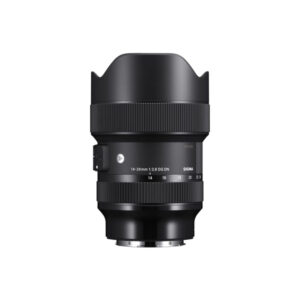
Astrophotography is one of the most rewarding — and most demanding — things you can do with a camera. To capture the Milky Way arching over a dark field, or a sky full of pin-sharp stars, your lens has to do three difficult things at once: gather a huge amount of light, keep stars looking like points rather than smears, and stay sharp right into the corners of the frame. Very few lenses do all three well. Sigma’s fast wide-angle Art primes are among the best that do.
This guide covers the best Sigma lenses for astrophotography and night-sky work available in Bangladesh, what to look for in an astro lens, and how to get clean results under local skies. If you’re ready to point your camera up at night, Hope Enterprises stocks the genuine Sigma Art range that makes it possible, and the models below are the ones worth building a night kit around.
What makes a lens good for astrophotography
Choosing an astro lens is different from choosing a portrait or wildlife lens. Here’s what actually matters.
A very wide aperture. The night sky is faint, so you need to collect as much light as possible. That means f/1.4 to f/2.8 lenses. Sigma’s f/1.4 Art primes let in far more light than a typical f/2.8 or f/4 lens, which means brighter stars, more visible detail in the Milky Way, and lower ISO — cleaner images overall.
A wide focal length. For the Milky Way and star fields, you want a wide view: roughly 14mm to 24mm on full frame. Wider lenses also let you use longer shutter speeds before the stars start to trail (because the Earth’s rotation is less noticeable across a wide frame).
Well-controlled coma. This is the specialist part. “Coma” is an optical flaw that turns points of light — stars — near the edges of the frame into little wings or comet shapes. Cheaper fast lenses suffer badly from it. Sigma engineers its astro-focused Art primes specifically to keep stars looking like clean points across the whole frame.
Reliable manual focus. Autofocus doesn’t work on stars, so you focus manually to infinity. A lens with a smooth, precise focus ring — and, on Sigma’s newer astro lenses, a manual focus lock — makes nailing focus far easier in the dark.
Sigma 14mm f/1.4 DG DN Art — the ultimate astro lens
If you’re serious about the Milky Way, this is the lens. The Sigma 14mm f/1.4 DG DN Art was designed with astrophotography as a primary purpose, and it shows. The combination of an ultra-wide 14mm view and a remarkable f/1.4 aperture is almost unheard of — it gathers an enormous amount of light while framing a huge sweep of sky.
Crucially, Sigma built it to control coma and keep stars sharp into the corners, which is exactly where lesser lenses fall apart. It even includes thoughtful astro features like a rear filter holder and a manual focus lock so your infinity focus doesn’t drift once you’ve set it in the dark. It’s a big, premium lens, but for dedicated night-sky shooters there’s genuinely nothing else quite like it.
Sigma 20mm f/1.4 DG DN Art — the balanced choice
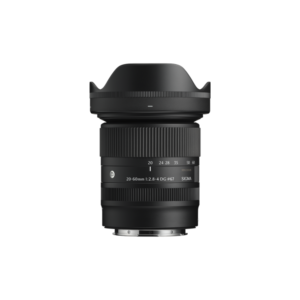
The Sigma 20mm f/1.4 DG DN Art is the sweet spot for many astrophotographers. 20mm is wide enough for expansive Milky Way compositions but slightly tighter than 14mm, which makes it easier to include foreground elements — a tree line, a building, a river — without the extreme perspective of an ultra-wide.
You still get that light-hungry f/1.4 aperture and Sigma’s strong coma control, plus the same manual focus lock and rear filter holder found on its astro-oriented Art siblings. It’s also more versatile in daylight than a 14mm, doubling as a landscape and interior lens. For someone who wants one lens that does astro brilliantly and earns its keep the rest of the time, the 20mm is the pick.
Sigma 24mm f/1.4 DG DN Art — for foreground and flexibility
24mm is the widest of the “normal-wide” focal lengths and a long-time favourite for nightscapes that balance sky and land. The Sigma 24mm f/1.4 DG DN Art delivers the light-gathering and star sharpness you need while being compact and flexible enough to live on your camera as an everyday wide prime.
If your astro style leans toward including a strong foreground — a lit doorway, a person under the stars, a landscape horizon — 24mm gives you room to compose that story while still capturing plenty of sky. It’s the most general-purpose lens of the three.
A more affordable entry point
Full-frame f/1.4 Art primes are premium purchases. If you’re starting out or shooting APS-C, you can still get into astrophotography with faster, more affordable Sigma wides such as the Sigma 16mm f/1.4 DC DN Contemporary. On a crop-sensor body it gives a wide, bright view that’s very capable under dark skies, at a fraction of the cost. It won’t match the corner-to-corner perfection of the dedicated Art astro lenses, but it’s a superb, budget-friendly way to learn the craft.
Quick comparison
| Lens | Best for | Note |
| Sigma 14mm f/1.4 DG DN Art | Pure Milky Way / widest sky | Astro-first design, filter holder, focus lock |
| Sigma 20mm f/1.4 DG DN Art | Sky + some foreground | Best all-round astro balance |
| Sigma 24mm f/1.4 DG DN Art | Foreground-heavy nightscapes | Most versatile in daylight too |
| Sigma 16mm f/1.4 DC DN (APS-C) | Budget / beginners | Great entry point on crop bodies |
Getting good results under Bangladesh skies
Gear is only part of astrophotography — technique and location decide the rest.
Find dark skies. Light pollution is the biggest obstacle. City skies in Dhaka, Chattogram or Sylhet wash out the stars, so plan to shoot from rural areas, away from town lights. The darker your location, the more the Milky Way reveals itself.
Pick the right time. The Milky Way’s bright core is most visible in the pre-monsoon and post-monsoon months, when skies are clearer. Shoot around the new moon — moonlight brightens the sky and hides faint stars — and check that the night is genuinely cloud-free.
Use a tripod and the right settings. A sturdy tripod is non-negotiable. As a starting point, open to your widest aperture (f/1.4), set ISO around 1600–3200, and use a shutter speed of roughly 15–20 seconds at these wide focal lengths before stars begin to trail. Focus manually to infinity using live view zoomed in on a bright star.
Mind the humidity and dew. Bangladesh nights can be damp, and lenses fog up. Bring a lens cloth, consider a simple lens warmer for long sessions, and — critically — store your lens in a dry cabinet afterwards, because moisture left on glass invites fungus in this climate.
Full frame vs APS-C for astrophotography
Sensor size affects your night-sky results. Full-frame cameras gather more light and generally handle high ISO with less noise, which is a real advantage when you’re pushing past ISO 3200 in the dark. They also pair naturally with Sigma’s f/1.4 Art primes for the cleanest possible results.
That said, APS-C cameras are perfectly capable of beautiful astrophotography, especially with a fast lens like the Sigma 16mm f/1.4 DC DN. You’ll work a little harder in post-processing to control noise, but plenty of stunning Milky Way images are made on crop-sensor bodies. Don’t let sensor size stop you from starting — technique, a dark sky, and a fast lens matter more than the last stop of noise performance.
Understanding your exposure settings
Astrophotography exposure is a balance between aperture, ISO and shutter speed, with one extra rule: the stars move.
Aperture: open as wide as the lens allows — f/1.4 on the Art primes — to gather maximum light. Some shooters stop down very slightly, to around f/2, to sharpen the extreme corners, but wide open is the usual starting point.
Shutter speed and star trails: because the Earth rotates, stars streak if your exposure runs too long. A rough guide is the “500 rule” — divide 500 by your focal length for the maximum seconds before trailing shows. At 20mm that’s about 25 seconds; at 14mm, longer still, which is part of why ultra-wide lenses are prized for astro. On very high-resolution cameras a stricter version (the “NPF rule”) gives tighter stars, but 500 is a fine place to begin.
ISO: start around 1600–3200 and adjust. Higher ISO brightens the image but adds noise; a fast f/1.4 lens lets you keep ISO lower for the same brightness, which is its biggest practical advantage for astro.
Focus: switch to manual, use live view, zoom in on the brightest star you can find, and adjust until it’s the smallest, sharpest point. Then leave the focus ring alone — this is where the manual focus lock on Sigma’s astro Art lenses genuinely helps.
Planning an astro shoot in Bangladesh
Success at night is mostly planning. A few local pointers:
Escape the light. Bangladesh’s cities are bright, so the biggest single improvement you can make is distance from urban light pollution. Rural areas, riverbanks, haor wetlands, hill areas and coastal spots away from towns give you the darkest skies. A light-pollution map app helps you find them.
Time it with the moon and season. Shoot near the new moon so moonlight doesn’t wash out the stars. The clearer, drier windows before and after the monsoon usually offer better transparency than the peak humid months. A stargazing app shows when and where the Milky Way core rises.
Watch the weather. You need genuinely clear skies. Check the forecast for cloud cover and humidity, and be ready to reschedule — astrophotography rewards patience more than almost any other kind.
Bring the right support. A sturdy tripod is essential, and a remote release or the camera’s self-timer prevents shake. A head torch with a red-light mode keeps your night vision intact while you adjust settings.
A little post-processing goes a long way
Straight out of camera, an astro shot often looks flat — that’s normal. Shoot in RAW so you can recover detail, then gently lift contrast, set the white balance to taste, and reduce noise to reveal the Milky Way’s structure. Even basic adjustments transform a dull frame into a striking one. The cleaner your original exposure — helped by a fast Sigma lens keeping ISO down — the more room you have to edit before noise takes over.
Frequently asked questions
What’s the single most important feature in an astro lens? A wide maximum aperture combined with good coma control. You need to gather light and keep stars looking like sharp points at the edges. Sigma’s f/1.4 Art primes are engineered for exactly this.
Can I do astrophotography with a kit lens? You can start with one, but a typical f/3.5–5.6 kit lens gathers far less light, forcing higher ISO and noisier results. A fast prime like the Sigma 20mm or 16mm f/1.4 is a dramatic upgrade for night skies.
Which Sigma lens should a beginner start with? On full frame, the 20mm f/1.4 Art is the best all-round balance of wide sky and manageable size. On APS-C, the 16mm f/1.4 is an affordable, capable entry point.
Do I need a star tracker? Not to begin. A tracker enables longer, cleaner exposures, but you can capture excellent wide-field Milky Way shots on a simple tripod with a fast lens and the settings above.
Buy genuine Sigma astro lenses in Bangladesh
Astro lenses like the 14mm and 20mm f/1.4 Art are premium instruments, and you want a genuine unit with proper warranty behind an investment like this. Hope Enterprises is the authorised Sigma distributor in Bangladesh, supplying original Sigma lenses with official warranty and nationwide delivery — so the lens you receive is the real thing, backed by local support.
If you’re building a night-sky kit and you’re not sure whether to start with the 14mm, the 20mm, or an APS-C 16mm, the team at Hope Enterprises can help you match the right Sigma lens to your camera, your budget and your style of astrophotography.
Final thoughts
Astrophotography rewards fast, wide, well-corrected lenses, and that’s precisely what Sigma’s Art primes deliver. The 14mm f/1.4 is the ultimate Milky Way tool; the 20mm f/1.4 is the best all-round balance of sky and foreground; the 24mm f/1.4 is the most versatile day-and-night choice; and the APS-C 16mm f/1.4 is a smart, affordable way in. Pair one with dark skies, a tripod, and a little patience, and you’ll come home with images of the night that genuinely stop people in their tracks.