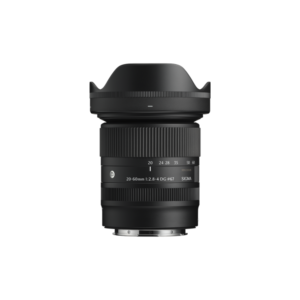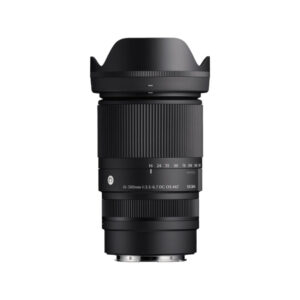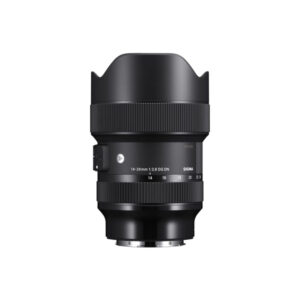
Sigma sells two full-frame f/2.8 standard zooms. They overlap almost completely. One costs noticeably more and weighs nearly twice as much as the other. This confuses people, and the confusion is reasonable, because the marketing does not explain the difference well.
Here is the actual difference, and here is how to choose.
The short answer
Buy the 24-70mm F2.8 DG DN II Art if you shoot professionally, need 24mm, or shoot moving subjects for a living.
Buy the 28-70mm F2.8 DG DN Contemporary if weight matters to you, you shoot travel or documentary, or you have looked at the price gap and felt something.
Most people who are not shooting weddings or sport should buy the 28-70mm and would be happier with it. That is the honest recommendation and the rest of this article explains why.
The specification gap
| 24-70mm F2.8 DG DN II Art | 28-70mm F2.8 DG DN Contemporary | |
| Weight | ~745g | ~470g |
| Length | ~120mm | ~101mm |
| Filter thread | 82mm | 67mm |
| Aperture ring | Yes, clickable/de-clickable | No |
| AF motor | Dual HLA linear | Stepping motor |
| Min focus (wide) | ~17cm | ~19cm |
| Custom buttons | Two AFL buttons | None |
| Weather sealing | Full | Mount gasket only |
| Zoom lock | Yes | No |
The differences cluster into three groups: range, build, and autofocus. Price follows from those.
Difference 1: those four millimetres at the wide end
24mm to 28mm sounds like nothing. It is not nothing.
The angle of view at 24mm is 84 degrees. At 28mm it is 75 degrees. That is a meaningful chunk of frame, and where you notice it is specific:
You need 24mm for:
- Interiors and real estate, where you cannot back up through a wall
- Wedding ceremonies where the whole stage plus the crowd has to fit
- Landscape with a strong foreground
- Vlogging at arm’s length, where 28mm crops your own head
- Group shots in cramped venues
28mm is fine for:
- Street photography
- Travel and documentary
- Portraits at any length
- Events where you can move
- Product and food work
The rule of thumb: if you regularly find yourself at the wide end of your zoom and still backing up, you need 24mm. If you rarely go wider than 35mm, you are paying for millimetres you never use.
At the long end they are identical. Both stop at 70mm, both at f/2.8.
Difference 2: 275 grams
This is the difference that changes behaviour rather than image quality, and it is the one people underestimate.
745g versus 470g. On a spec sheet that is a number. On a body it is the difference between a camera you sling over your shoulder and a camera you decide not to bring.
Length matters too. The 28-70mm at 101mm is short enough to sit comfortably on a Sony a7C or a7CR without the setup becoming front-heavy. The 24-70mm II on a compact body is a lens with a camera attached.
The filter thread tells the same story. 82mm filters are large and expensive. 67mm filters are the size most of your other lenses probably take, which means one set of filters covers your kit.
A working truth that photographers only admit after a few years: the lens you carry beats the lens with better specs. If the weight of the 24-70mm means you leave it home on the days you were not planning to shoot anything, the 28-70mm has already won.
Difference 3: autofocus
This is where the Art lens earns its price rather than just charging for it.
The 24-70mm II uses dual HLA linear motors. The 28-70mm uses a stepping motor.
For a static subject, the difference is invisible. Both lock focus quickly and accurately, and both work with Sony’s Eye AF and subject recognition.
For a subject moving toward the camera, the difference is real. Linear motors drive the focus group faster and hold tracking more consistently. If you shoot a child running, a bride walking down an aisle, or anything at a sports event, the Art lens will deliver a higher keeper rate.
If you shoot landscapes, architecture, portraits, food, products, or street, the stepping motor is more than adequate and you will never notice.
Difference 4: handling and controls
The Art lens has a physical aperture ring that can be de-clicked for video, two customisable AFL buttons, an iris lock, a zoom lock, and a proper AF/MF switch. It has full weather sealing rather than just a mount gasket.
The Contemporary has a mount gasket, an AF/MF switch, and that is roughly it.
For video shooters, the de-clickable aperture ring is genuinely useful. For photographers who assign functions to lens buttons, those two AFL buttons become part of muscle memory.
For everyone else, these are features you will read about and never touch.
Optical quality: the surprising part
You would expect the Art lens to walk away with this. It does not.
Both lenses are excellent. The 24-70mm II is sharper in the extreme corners at the widest apertures and controls distortion slightly better before correction. The 28-70mm is very slightly softer at 70mm wide open.
But we are comparing degrees of good. At normal viewing sizes, shot at f/4 or f/5.6, you cannot tell these apart. Sigma made a deliberate decision with the 28-70mm not to compromise the optics in order to hit the price and weight, and it shows.
The 28-70mm is arguably Sigma’s most impressive engineering achievement of recent years for exactly this reason. It is genuinely near-Art optical performance at Contemporary size and cost.
Which one for which photographer
Wedding and event photographers → 24-70mm II
You need 24mm for stage-plus-crowd frames. You need weather sealing because outdoor holud in Bangladeshi weather is a gamble. You need the AF tracking for processions. And you are charging clients, so the lens is a business expense that pays for itself in a season.
Travel and street photographers → 28-70mm
You carry the camera all day and you walk. 275g compounds over eight hours. 28mm covers virtually everything street photography asks for. The money saved buys a prime.
Portrait photographers → 28-70mm
You mostly shoot between 50mm and 70mm anyway. 24mm is a distortion problem, not a feature. Save the money and put it toward an 85mm f/1.4.
Real estate and interiors → 24-70mm II
You will use 24mm constantly and wish for 20mm. Not a close call.
Video and content creators → depends on your body
On a gimbal, the 275g difference is significant, and the 28-70mm may be the only one your gimbal balances comfortably. Handheld with an aperture ring you want to de-click, the Art lens is better equipped. Decide based on how you actually shoot.
First full-frame zoom, general use → 28-70mm
Almost always. Buy it, shoot for a year, and if you keep hitting the wide end and wishing for more, upgrade with actual evidence rather than a forum argument.
Buying advice for Bangladesh
Mounts: both are available in Sony E and L-mount. The 28-70mm has broader mount availability. Confirm before ordering.
Filters: the 82mm filters the Art lens needs are expensive and hard to find locally. Budget for that. The 28-70mm’s 67mm thread matches most Sigma primes, so one filter set covers everything.
Warranty: buy authorised. A standard zoom is the lens with the most shutter-hours in any kit, and the zoom mechanism and AF motor are the parts that wear. Local service matters.
Humidity: dry cabinet, no exceptions. Fungus inside a 24-70mm is an expensive lesson.
Pricing: Sigma lens prices in Bangladesh shift with duty and exchange rates. Confirm current figures with your dealer.
Frequently asked questions
It is if you need 24mm, shoot moving subjects professionally, or need full weather sealing. If your shooting is mostly static subjects between 28mm and 70mm, the optical difference is small enough that the 28-70mm is the better buy.
For street, travel, portraits and most events, yes. For interiors, real estate, vlogging at arm’s length and tight ceremony coverage, no. Look at your existing photos and check how often you shot at your lens’s widest setting.
The 24-70mm II, marginally, in the corners at wide apertures. In normal use at normal viewing sizes, neither noticeably outresolves the other.
No. Contemporary is Sigma’s designation for lenses balancing size, weight and performance. Art prioritises optical performance regardless of size. The 28-70mm is optically close to Art level and Sigma effectively proved the line between the two ranges is now blurry.
The Art lens has a de-clickable aperture ring and better weather sealing. The Contemporary is lighter, which matters on a gimbal. Both have comparable focus breathing. Choose by weight if you use a gimbal, by controls if you do not.
Final word
Sigma built two lenses for two different people and priced them accordingly. The 24-70mm II is the professional tool: fully featured, fully sealed, fully capable, and heavy enough that you will notice.
The 28-70mm is for everyone who realised that carrying the lens is the actual constraint. If you are undecided, that means you do not need 24mm badly enough to justify it. Buy the 28-70mm.